Xianheng International (Hangzhou) Electrical Manufacturing Co., Ltd.
Partial Discharge Testing & Gas Leak Equipment

Partial Discharge Testing & Gas Leak Equipment

Request Quotation
Partial Discharge Testing & Gas Leak Equipment Category
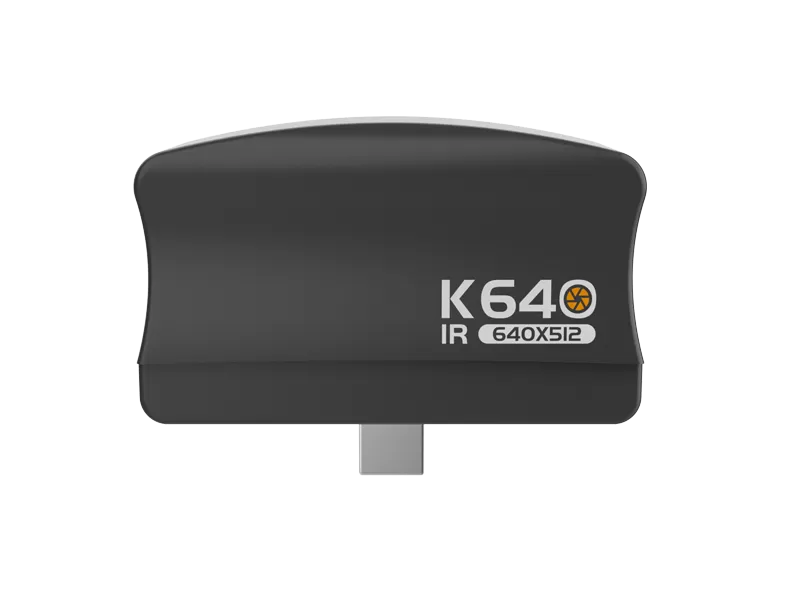
K640 Thermal Camera Module

K640 Thermal Camera Module

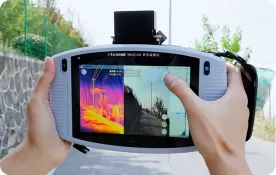
The K640 thermal camera module uses an uncooled infrared detector with high thermal sensitivity to accurately detect temperature changes. Can support multiple interfaces and real-time image output, and can be easily integrated into various detection systems and monitoring platforms.


  • IR resolution 640*512

  • Type-C port, quick adaptation

  • Different color palettes & image modes

  • Battery-free,little power less than 0.53W

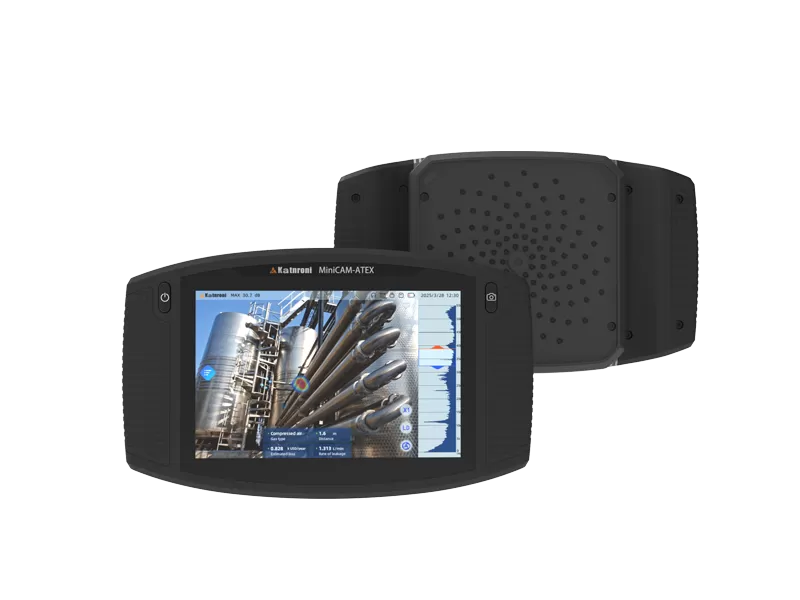
Minicam-ATX

Minicam-ATX

The Mini CAM-ATEX is ATEX certified with a rating of II 3G Ex ic IIC T5 Gc, ensuring safe operation in potentially explosive atmospheres while adhering to stringent safety standards.


  • Intelligent analysis

  • Ultrasonic monitoring

  • 128 digital microphones

  • Gas leakage function


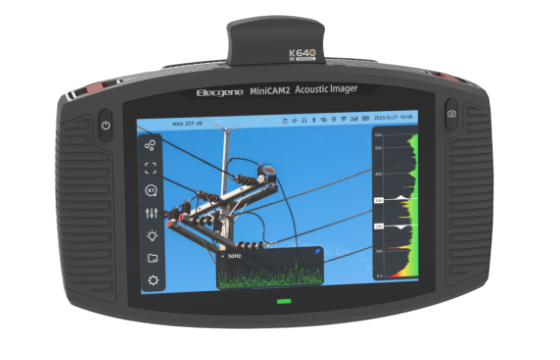
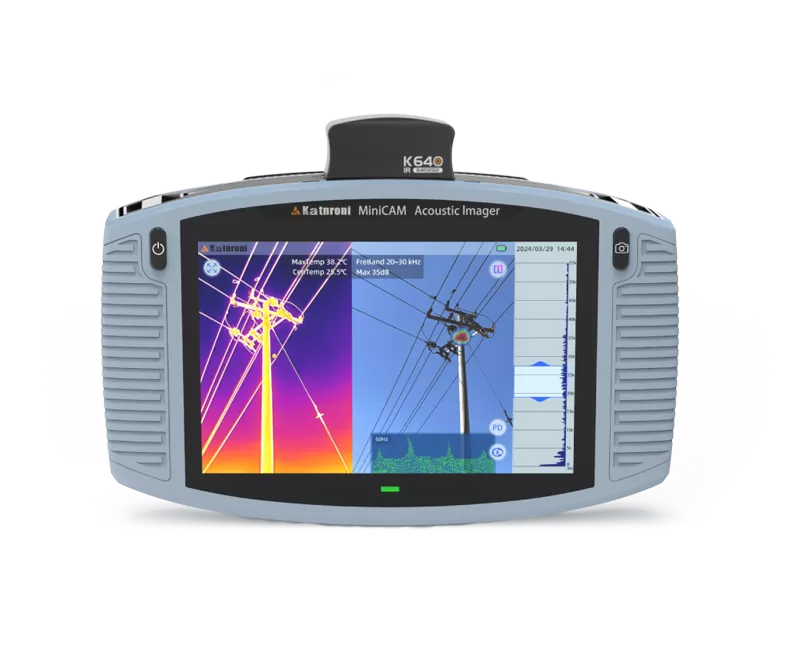
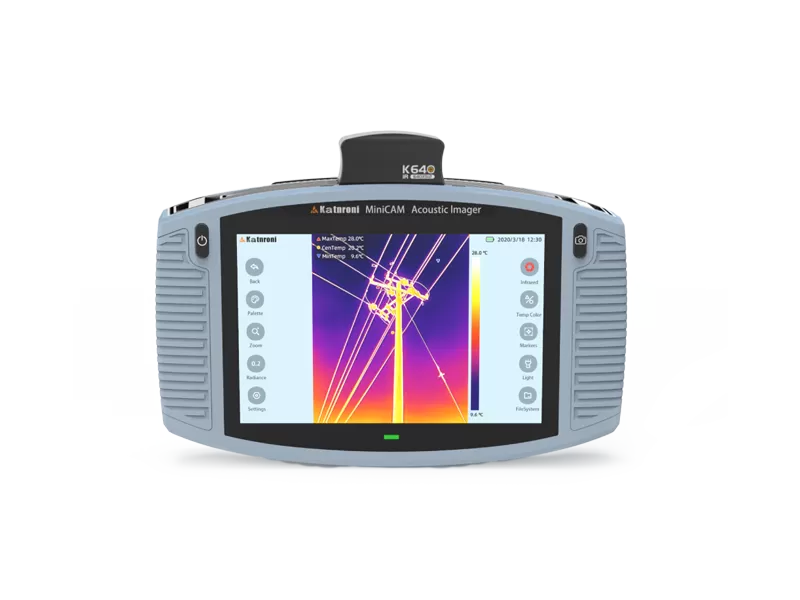
Minicam Acoustic Imager (With Thermal Module)

Minicam Acoustic Imager (With Thermal Module)

The Mini CAM is a versatile tool that detects electric faults, gas leaks, and hard-to-hear noises with precision, offering both acoustic and thermal imaging for comprehensive diagnostics.


  • Intelligent analytics

  • Ultrasonic monitoring

  • 128 digital microphones

  • Support PRPD function


FAQs about Partial Discharge Testing & Gas Leak Equipment

What causes partial discharge?

Partial discharge refers to a discharge phenomenon that occurs in a localized region within the insulation system of electrical equipment. The discharge is limited to part of the insulation and does not form a complete breakdown. It is mainly caused by the local electric field strength exceeding the dielectric breakdown strength of that region, and is usually related to internal insulation defects (such as voids, impurities) or electric field distortion. Long-term existence of partial discharge will lead to insulation performance deterioration and may eventually cause insulation breakdown failure.

How does acoustic camera detect partial discharge?

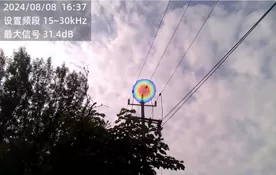
When partial discharge occurs, instantaneous ionization and micro shock waves are generated, radiating acoustic signals dominated by ultrasonic waves. The acoustic imaging device collects these sound signals through a microphone array, and uses beamforming algorithms to analyze the time difference and phase difference of each channel, thereby achieving spatial localization of the sound source. The sound intensity distribution is then overlaid on a visible light image to visually display the location of the partial discharge.

How is acoustic imaging different from thermal imaging?

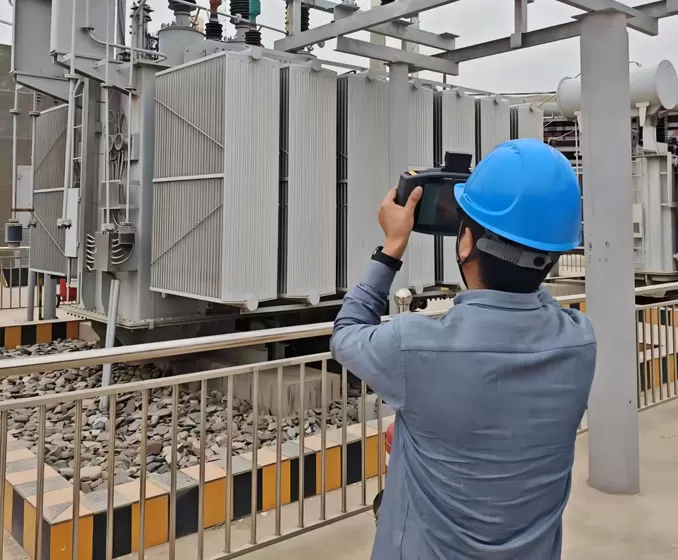
Acoustic imaging identifies sound waves (audible sound + ultrasonic) generated by equipment anomalies, collects sound signals through a microphone array, and uses beamforming for spatial localization. The output result is the sound source location and sound intensity distribution (acoustic image). Thermal imaging, based on the infrared radiation generated by objects due to temperature, infers the temperature field according to the relationship between infrared radiation and temperature. The output result is temperature distribution (thermal image) and temperature values. The two methods detect from different dimensions and have strong complementarity. Through combined application, they can achieve full-process detection capability from early warning to fault confirmation.

What are the benefits of non-contact inspection?

①Improved safety. No need to contact live equipment or high-temperature components, avoiding risks of electric shock, burns, and misoperation. Suitable for high voltage, power systems, and hazardous environments.

②Inspection without shutdown (online detection). Detection can be carried out while the equipment is in operation, without affecting production or power supply, and can identify hidden dangers that only occur during operation.

③High efficiency and wide coverage. Long-distance rapid scanning (tens of meters or even farther) can cover a large range of equipment at once, suitable for inspection and batch screening, such as substations, overhead lines, and factory inspections. Faults can be detected early and in a timely manner. Early abnormal signals (such as partial discharge and minor leaks) can be captured, providing early warning before temperature rise or severe faults, reducing unexpected failures and downtime losses.

④Earlier fault detection. Early abnormal signals can be captured, reducing unexpected failures and downtime losses.

⑤No interference or damage to equipment. Does not change the original state of the equipment and does not cause damage.


How far can an acoustic camera detect faults?

The effective detection distance of an acoustic camera is greatly affected by working conditions. The typical effective detection range is 5–50 meters. Under strong sound sources and ideal environments, it can reach tens of meters or even farther. However, the actual distance mainly depends on the sound source intensity, environmental noise, and propagation conditions. In common power inspection scenarios, the optimal detection distance is 5–20 meters.

When should partial discharge testing be performed?

①Routine operation and maintenance. After new equipment is put into operation, during the initial operation period (first 3–6 months), and during regular inspections (such as once every quarter or half year).

②When abnormal or suspicious signals appear. Abnormal heating detected by infrared inspection with unknown cause, abnormal sounds heard by human ears, unusual odors from equipment, abnormal electrical test data, or protective device actions or abnormal alarms.

③Under critical working conditions. Such as during high load operation, in humid conditions, after rain, or in high humidity environments.


Request a Quote for Electrical Testing Equipment

Please tell us your testing requirements, application scenarios or project details, and our engineers will recommend the solution and quotation that suits you within 24 hours.

Contact Us
Address:
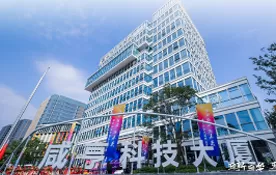
Xianheng Technology Building, No. 101 Xinghuang Alley, Gongshu District, Hangzhou, 310022, China.
Request a Free Quote
Get a Free Quote
Our representative will contact you soon.
* Your Name
* E-mail
* Phone/Whatsapp
Company
Country
* Message/Requirements
We use cookies to offer you a better browsing experience, analyze site traffic and personalize content. Part of the tracking is necessary to ensure SEO effectiveness,
By using this site, you agree to our use of cookies. Visit our cookie policy to learn more.
Reject Accept