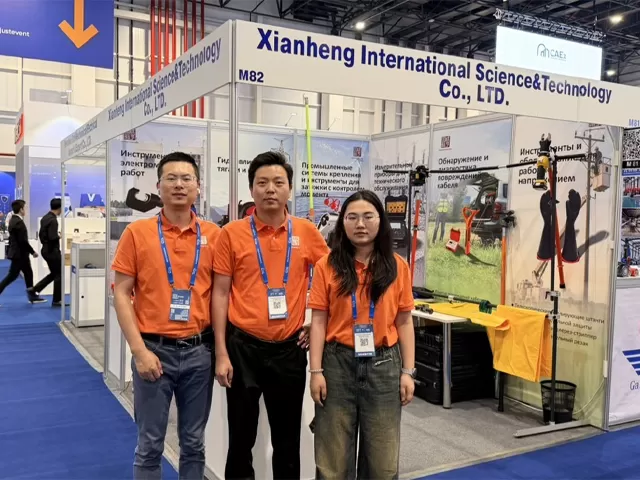
Xianheng International (Hangzhou) Electrical Manufacturing Co., Ltd.
AC Insulation Tester

High Voltage AC Insulation Tester (Hipot Tester) – Precise Dielectric Withstand Testing

Request Quotation
AC Insulation Tester Category
  • Elecgene's AC insulation tester series supports a variety of insulation test methods

  • Our insulation test equipment helps evaluate insulation condition and performance, enabling effective insulation health assessment

  • Widely used in substations, power utilities, industrial plants, and electrical maintenance services


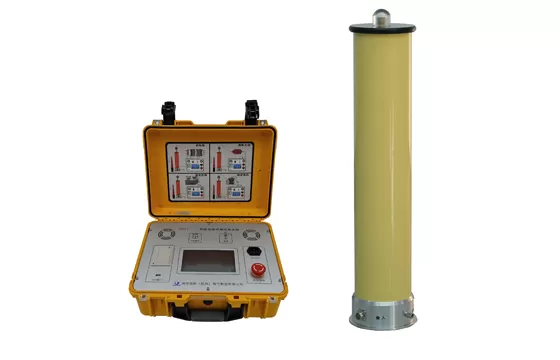
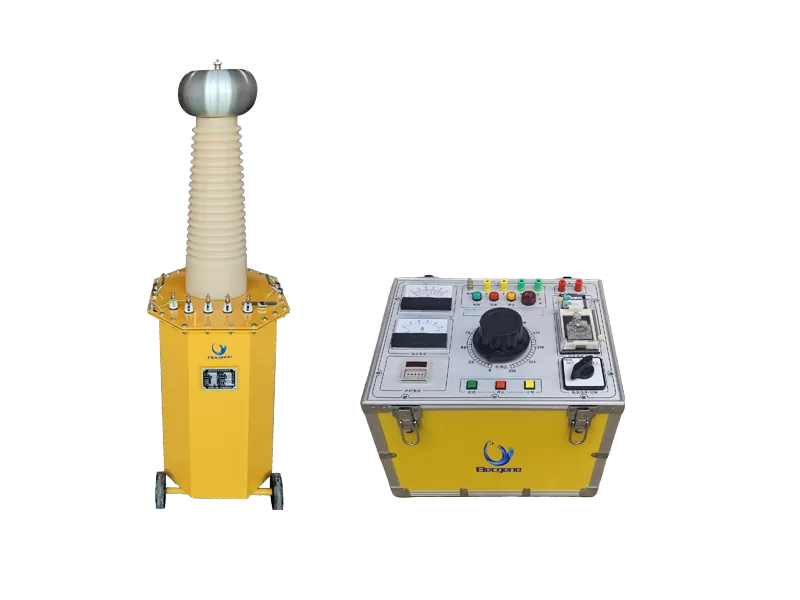
YTB-20 Series 100kVRMS AC140kV DC High-Voltage Test System

YTB-20 Series 100kVRMS AC140kV DC High-Voltage Test System

The AC voltage test sets are suitable for kinds of electrical products, electrical equipments and insulated materials, testing the insulated level of products, discovering the insulated situation of tested objects.


  • Separate control and HV units

  • Continuously adjustable voltage

  • DC testing via a rectifier

  • In-built over-current protection

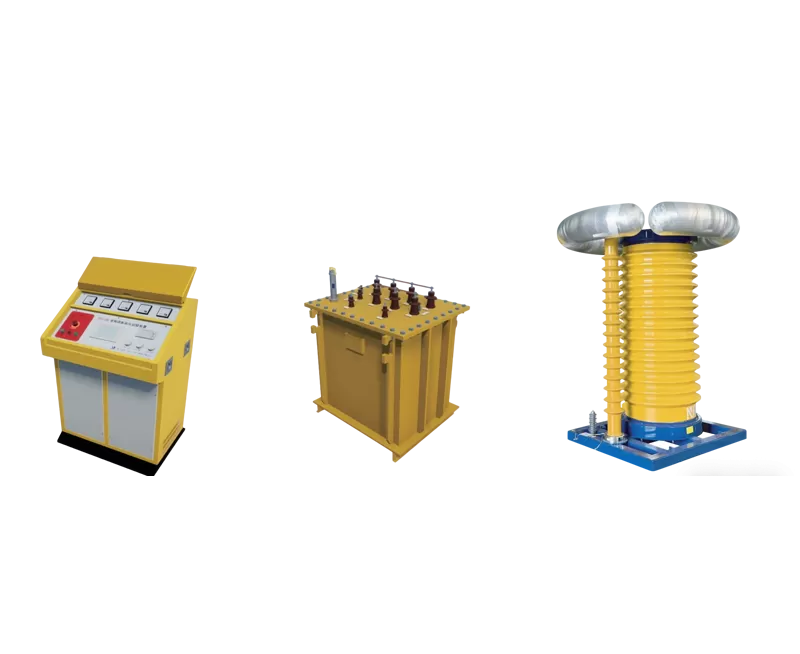
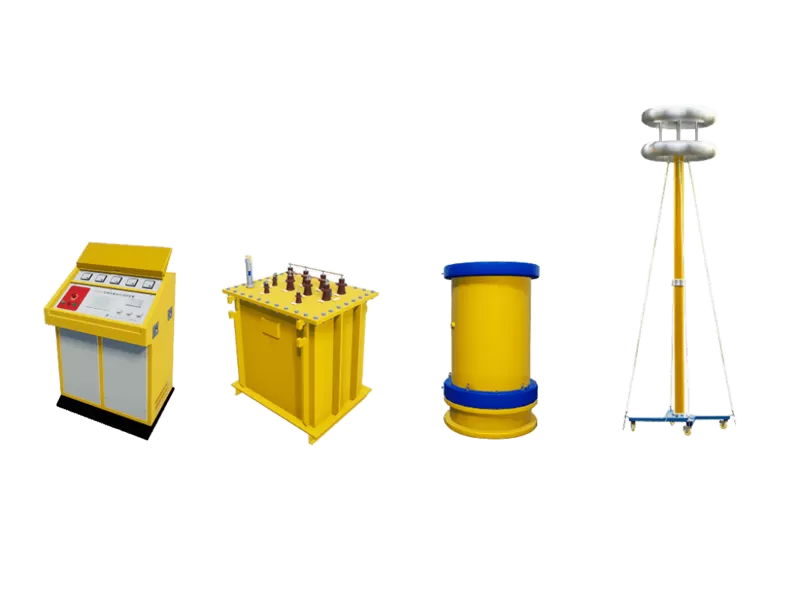
ESR-800 Series HV Resonant Test System (Umbrella Reactor Build in Divider )

ESR-800 Series HV Resonant Test System (Umbrella Reactor Build in Divider )

Through the reactor of the combined device, it can output stable AC high voltage, which is mostly used for AC voltage withstand test of on-site electrical equipment, such as cross-linked cables, transformers, GIS, motors and generators.


  • Lower input power requirement

  • Pure AC Sine Wave at output

  • Easy to combine reactor to output different voltage.

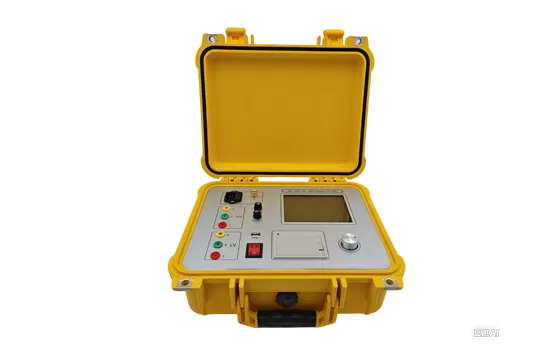
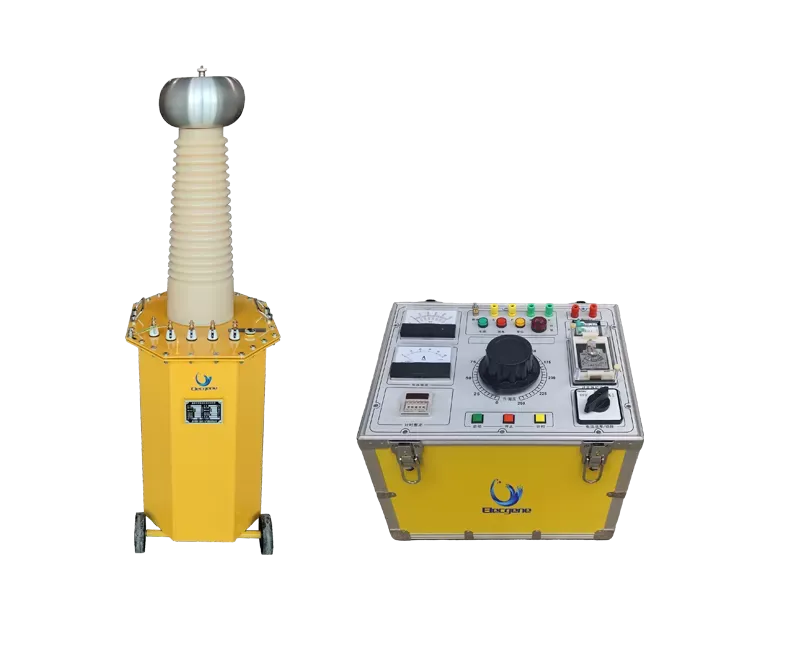
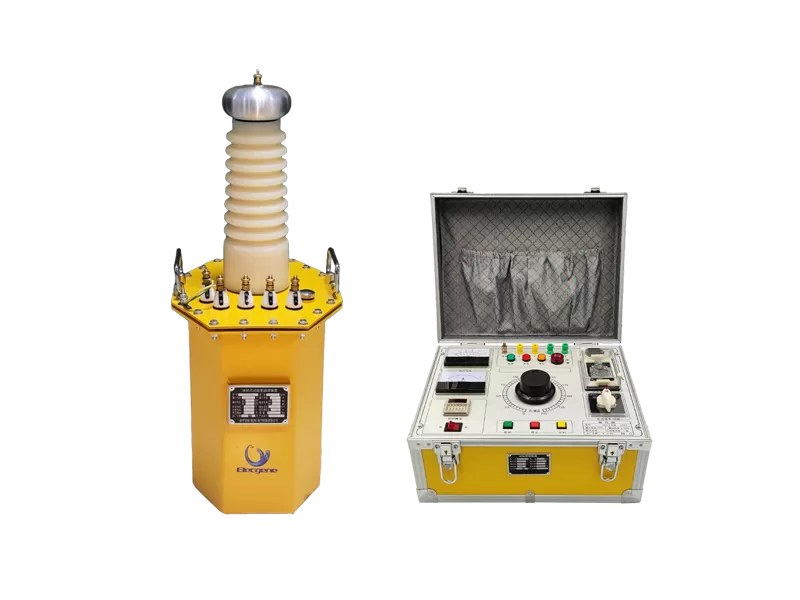
YTB-20 Series 50kVRMS AC/70kV DC High-Voltage Test System

YTB-20 Series 50kVRMS AC/70kV DC High-Voltage Test System

The AC voltage test sets are suitable for kinds of electrical products, electrical equipments and insulated materials, testing the insulated level of products, discovering the insulated situation of tested objects.


  • Separate control and HV units

  • Continuously adjustable voltage

  • DC testing via a rectifier

  • In-built over-current protection

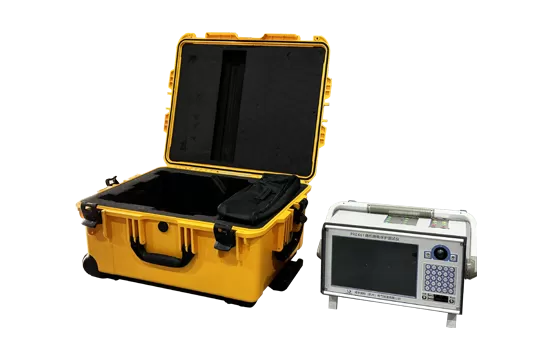
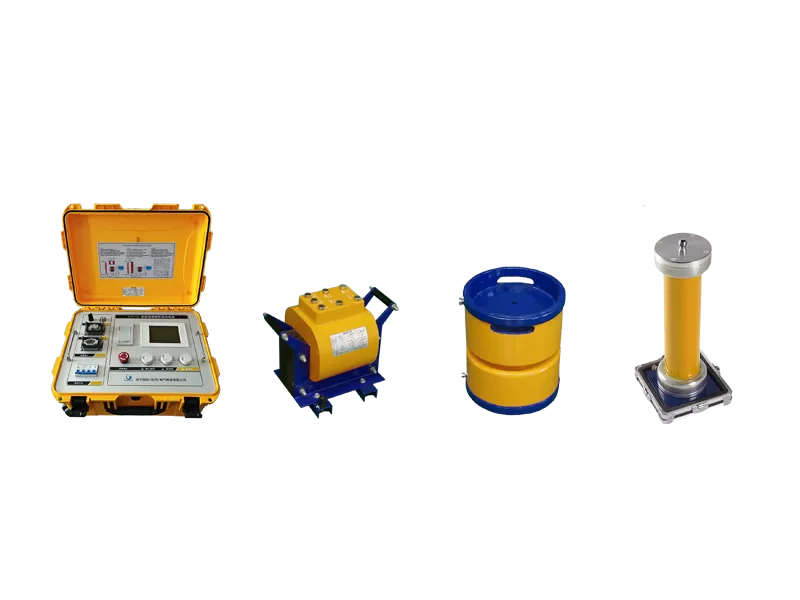
ESR-800 HV Resonant Test System

ESR-800 HV Resonant Test System

Through the reactor of the combined device, it can output stable AC high voltage, which is mostly used for AC voltage withstand test of on-site electrical equipment, such as cross-linked cables, transformers, GIS, motors and generators.


  • Lower input power requirement

  • Pure AC Sine Wave at output

  • Easy to combine reactor to output different voltage.

ESR-800 AC Resonant Test System

ESR-800 AC Resonant Test System

Through the reactor of the combined device, it can output stable AC high voltage, which is mostly used for AC voltage withstand test of on-site electrical equipment, such as cross-linked cables, transformers, GIS, motors and generators.


  • Lower input power requirement

  • Pure AC Sine Wave at output

  • Easy to combine reactor to output different voltage.


Why choose ELECGENE's AC insulation testers

1. Accurate insulation condition assessment

Advanced test methods such as infrared (IR), pulse induction (PI), and dynamic resistance (DAR) provide reliable assessment of insulation conditions.


2. Wide voltage range for wide applications

Multiple test voltage ranges support various applications in power systems.


3. Comprehensive diagnosis and data analysis

Integrate diagnostic and data logging functions, support trend analysis, help users continuously monitor insulation degradation status, and develop scientific predictive maintenance plans.


4. High safety standards, safe operation

Built-in automatic discharge and other safety protection functions to ensure safe operation in high-pressure environments.

FAQs about AC insulation testers

Can you recommend an AC insulation tester solution based on our project requirements?

Sure. You only need to provide the project requirements and the equipment to be tested, etc., and we will recommend a suitable testing plan for you.

What is the typical delivery lead time for AC insulation testers?

Standard products are usually in stock, and delivery can be arranged within 1–3 days after order confirmation. For bulk orders or customized products, it typically takes 2–4 weeks.

How soon can you provide a quotation for AC insulation testers?

We usually provide a quotation within 48 hours after receiving your inquiry.

Can AC insulation testers be customized with the customer’s brand (private labeling/OEM)?

Yes. We support OEM services.

What shipping methods do you offer for AC insulation testers?

We support air freight, sea freight, and other common international shipping methods.

Do AC insulation testers come with a warranty? How long is it?

Yes. All products come with a 12-month warranty.

Do AC insulation testers comply with international standards?

The products are CE certified and comply with relevant IEEE/IEC standards.

Do you provide remote or on-site training for AC insulation testers?

We provide remote training support, technical support, and related service support. Please contact us for details.

Can you provide successful project cases or reference customers for AC insulation testers?

We have extensive project experience both domestically and internationally. You can view case studies on our website or contact us to discuss further.

How Is AC Insulation Testing Different from DC Insulation Testing?

AC and DC insulation testing evaluate insulation performance in different ways.

AC Insulation Testing

Produces an electric field distribution similar to actual operating conditions.

Does not cause significant space-charge accumulation within insulation materials.

Better reflects insulation behavior under power-frequency voltage stress.

Can be combined with dielectric loss (tan δ) measurements for more comprehensive insulation assessment.

DC Insulation Testing

Applies a constant DC voltage and primarily measures insulation resistance.

Generally requires smaller and more portable test equipment.

Commonly used for routine maintenance and field testing of long cable systems.

Does not provide dielectric loss information.

The choice between AC and DC testing depends on the equipment type, testing objective, and applicable standards.


Why Is AC Testing Closer to Real Operating Conditions?

Most power system equipment operates under 50 Hz or 60 Hz AC voltage. AC insulation testing uses the same type of alternating voltage, allowing the insulation system to be evaluated under electrical stress conditions similar to those experienced during normal service.

Compared with DC testing, AC testing can:

  • More accurately represent electric field distribution within the insulation system.

  • Reveal insulation weaknesses that appear under alternating voltage stress.

  • Better evaluate dielectric losses, partial discharge activity, and insulation aging characteristics.

  • Provide results that are more representative of actual operating performance.


For this reason, AC testing is widely used for factory acceptance, commissioning, and condition assessment of high-voltage equipment.


What Types of Equipment Require AC Insulation Testing?

AC insulation testing is commonly performed on a wide range of power system equipment, including:

  • Power transformers and instrument transformers

  • Dry-type and oil-immersed reactors

  • Medium- and high-voltage power cables

  • Switchgear, ring main units (RMUs), and busbar systems

  • High-voltage motors and generators

  • Power capacitors and surge arresters

  • Gas-insulated switchgear (GIS)

  • Large power electronic equipment, including renewable energy converters and inverter systems


The test helps verify insulation integrity before equipment is placed into service and throughout its operational life.


What Is Dissipation Factor (Tan Delta) in Insulation Testing?

Dissipation factor, commonly expressed as tan δ (tan delta), is a key indicator of insulation condition. It measures the electrical energy lost within insulation materials when they are subjected to an AC voltage.


A tan delta measurement can provide valuable information about insulation health:

  • Lower tan delta values generally indicate good insulation condition.

  • Increasing tan delta values may suggest insulation aging, moisture contamination, or internal defects.

  • Trending tan delta measurements over time helps identify developing insulation problems before failure occurs.

  • Tan delta testing is often used alongside AC withstand and insulation tests to provide a more complete assessment of equipment condition.


Because insulation deterioration often develops gradually, tan delta analysis is an effective tool for predictive maintenance and asset management.


Request a Quote for Electrical Testing Equipment

Please tell us your testing requirements, application scenarios or project details, and our engineers will recommend the solution and quotation that suits you within 24 hours.

Contact Us
Address:
Xianheng Technology Building, No. 101 Xinghuang Alley, Gongshu District, Hangzhou, 310022, China.
Request a Free Quote
Get a Free Quote
Our representative will contact you soon.
* Your Name
* E-mail
* Phone/Whatsapp
Company
Country
* Message/Requirements
We use cookies to offer you a better browsing experience, analyze site traffic and personalize content. Part of the tracking is necessary to ensure SEO effectiveness,
By using this site, you agree to our use of cookies. Visit our cookie policy to learn more.
Reject Accept