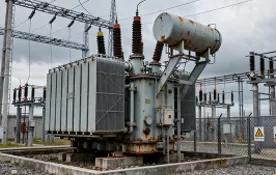
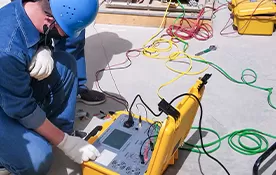
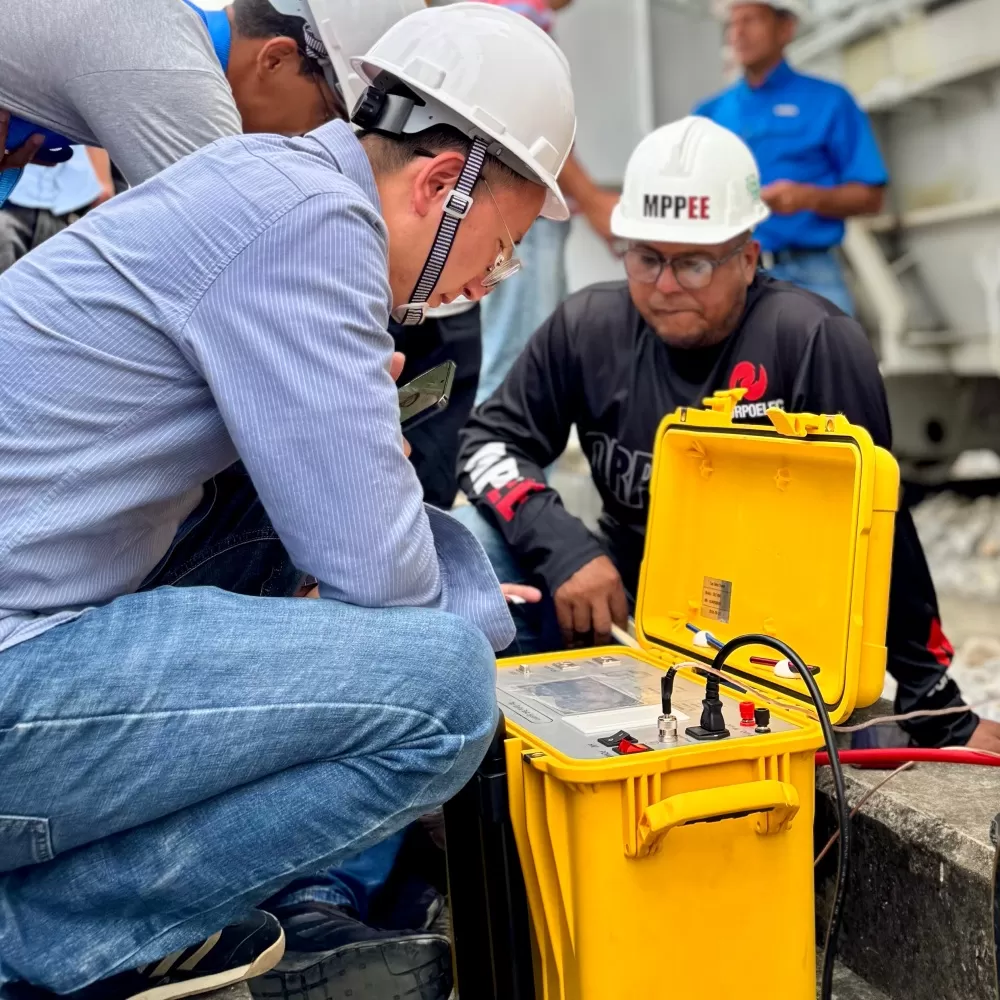
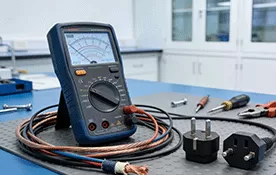
Insulation resistance test for transformer helps engineers check whether winding insulation, bushings, and oil-paper insulation can resist leakage current before a transformer is energized, commissioned, or returned to service. It is widely used in substations, utilities, industrial plants, and transformer maintenance work.
Elecgene provides professional electrical testing instruments for insulation diagnosis, transformer testing, switchgear maintenance, and high-voltage electrical inspection.
What Is a Transformer Insulation Resistance Test?
A transformer insulation resistance test measures the resistance of insulation between windings, and between windings and earth, by applying a controlled DC test voltage. The test result is usually shown in MΩ, GΩ, or TΩ. A higher and stable reading generally indicates cleaner, drier, and healthier insulation. A low or falling reading may suggest moisture, aging insulation, oil contamination, dirty bushings, incorrect wiring, or surface leakage. This test is commonly performed during factory inspection, site commissioning, routine maintenance, fault investigation, and after oil treatment or repair. For transformer insulation and dielectric testing, engineers often refer to IEC 60076-3, while IEEE C57.152 is widely used for field diagnostic testing of fluid-filled power transformers.
What Should Be Prepared Before Insulation Resistance Testing?
Test preparation means isolating the transformer, confirming safety, selecting the right DC voltage, and removing factors that may distort the insulation resistance reading.
The transformer must be de-energized, isolated, locked out, tested for absence of voltage, and safely grounded before connection. All windings should be discharged before and after each test because transformer insulation can store electrical charge.
Bushings, terminals, and the tank surface should be clean and dry. Moisture, dust, oil film, or carbon tracking can create leakage paths and reduce the reading. Surge arresters, meters, control cables, voltage transformers, or sensitive connected devices should be disconnected when they may affect the result or be damaged by the test voltage.
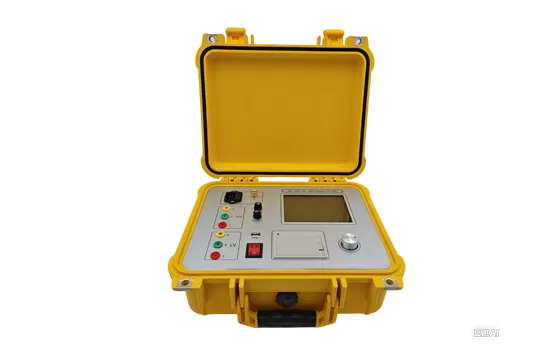
For transformer testing, the insulation tester should match the asset voltage and diagnostic purpose. Elecgene's insulation test equipment range supports field testing for transformers, cables, switchgear, motors, and substations.
How Do You Perform the Transformer Insulation Resistance Test Step by Step?
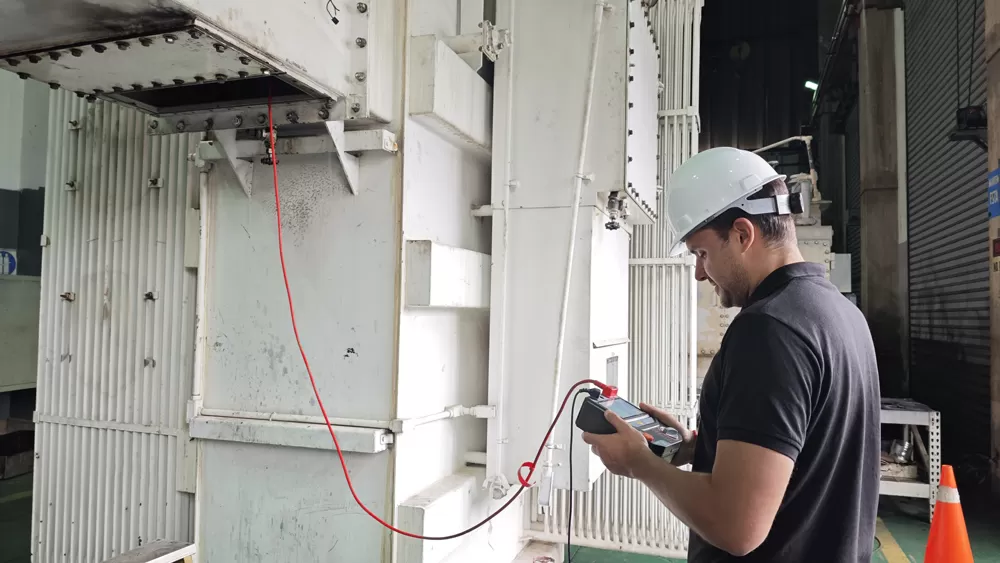
The test procedure includes shorting the winding group, applying DC voltage to the selected insulation path, recording readings over time, and discharging the transformer safely.
For a two-winding transformer, the most common test paths are HV to LV and earth, LV to HV and earth, and HV to LV. The terminals of the winding being tested are normally shorted together so the winding group is tested as one conductor.
| Test Path | What It Checks | Typical Use |
|---|
| HV to LV + earth | HV insulation to other parts | Commissioning and maintenance |
| LV to HV + earth | LV insulation to other parts | Routine inspection |
| HV to LV | Inter-winding insulation | Fault investigation |
| Winding to tank/earth | Winding insulation to grounded structure | Safety verification |
Basic test sequence:
Isolate and lock out the transformer.
Confirm absence of voltage and discharge all windings.
Short together the terminals of the winding group under test.
Connect the tester to the selected test path.
Select the correct DC test voltage according to rating and procedure.
Start the test and record the 1-minute reading.
For diagnostic testing, continue to 10 minutes for PI.
Stop the test and discharge the winding fully.
Repeat for other winding combinations.
Compare the result with history, temperature, and manufacturer guidance.
Common DC test voltages in field practice may include 1 kV, 2.5 kV, 5 kV, or 10 kV, depending on transformer rating and site procedure. The selected voltage should never exceed the transformer or connected equipment limits.
How Should PI, DAR, and Test Results Be Judged?
Result interpretation means evaluating insulation resistance, PI, DAR, temperature, stability, and historical trends together instead of relying on one number.
A single reading does not always prove transformer health. Insulation resistance changes with temperature, humidity, oil condition, transformer size, winding capacitance, and test duration. Therefore, trend comparison is usually more useful than one isolated result.
| Parameter | Common Method | Meaning |
|---|
| 1-minute IR | Resistance at 60 seconds | Basic insulation condition |
| DAR | 60-second IR / 30-second IR | Short-term absorption behavior |
| PI | 10-minute IR / 1-minute IR | Long-term polarization behavior |
| Trend | Current result vs past records | Aging, moisture, or abnormal decline |
Hioki describes PI as the 10-minute resistance divided by the 1-minute resistance, and DAR as a 1-minute reading divided by a 30-second or 15-second reading. In many field references, a PI value above 2.0 is often treated as a good sign, but the final judgment should follow the transformer manufacturer, site procedure, and asset history.
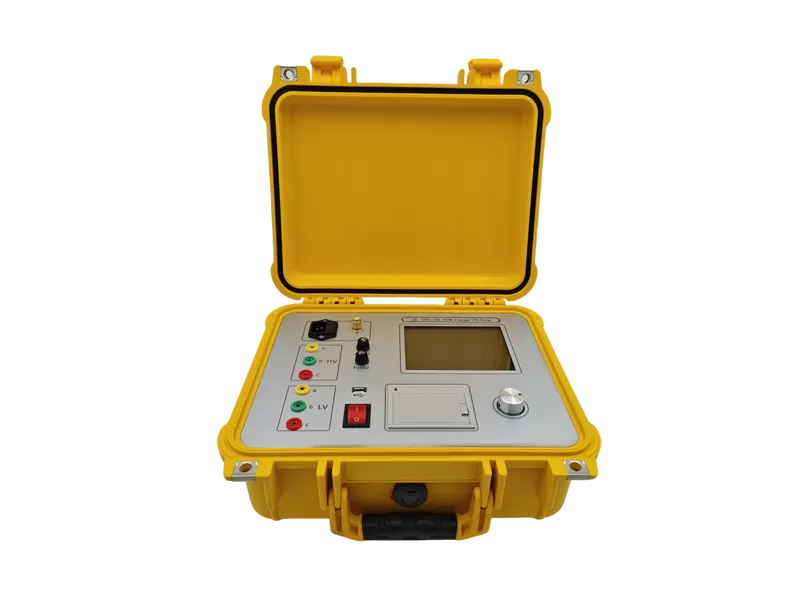
Elecgene's D1110 high-voltage insulation resistance tester supports 100 V to 12,000 V output, 10 kΩ to 35 TΩ measurement, and IR, IR(t), DAR, PI, SV, DD, ramp test, and voltage measurement modes. These functions help engineers record more complete transformer insulation data, not just a single resistance value.
Conclusion
A transformer insulation resistance test should be performed with strict isolation, correct test connections, suitable DC test voltage, accurate time-based readings, and full discharge after each test. For better diagnosis, engineers should evaluate 1-minute IR, PI, DAR, temperature, and historical trends together.
For substations, utilities, industrial plants, and transformer service companies, Elecgene offers reliable insulation testing solutions for transformers, cables, switchgear, and high-voltage equipment. To choose the right model for your application, contact Elecgene through the Contact Us page.
FAQ
1. Why is transformer insulation resistance tested?
It is tested to find moisture, contamination, aging insulation, bushing leakage, or unsafe leakage paths before energization or operation.
2. What is the normal test connection?
Common connections include HV to LV plus earth, LV to HV plus earth, HV to LV, and winding to tank or earth.
3. What test voltage should be used?
The voltage depends on transformer rating, manufacturer instructions, and site procedure. Common field choices include 1 kV, 2.5 kV, 5 kV, and 10 kV.
4. What is a good transformer insulation resistance value?
There is no universal value for all transformers. A stable high reading and a healthy historical trend are more meaningful than one fixed number.
5. Why is discharge required after testing?
Transformer windings can store charge after DC testing. Discharge protects personnel, instruments, and connected equipment.
6. Which tester is suitable for transformer testing?
A suitable tester should provide the required DC voltage, high resistance range, PI/DAR functions, stable readings, safety protection, and data reporting. Elecgene D1110 is suitable for high-voltage transformer insulation diagnosis.

 English
  日本語
日本語  한국어
한국어  français
  Deutsch
  русский
  português
  العربية