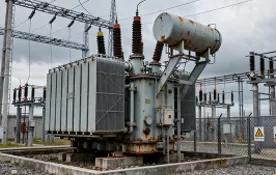
Power transformers are among the most valuable assets in electrical power systems. As transformers age, their insulation systems gradually deteriorate due to moisture, contamination, oxidation, and thermal stress. Detecting insulation degradation before a failure occurs is essential for maintaining grid reliability and reducing maintenance costs.
A Tan Delta Test, also known as a Power Factor Test or Dissipation Factor Test, is one of the most widely used diagnostic methods for evaluating transformer insulation condition. By measuring dielectric losses within insulation materials, the test helps maintenance engineers identify hidden problems long before they become critical failures.
For utilities, transformer manufacturers, and industrial facilities, Tan Delta testing is often performed alongside winding resistance tests, transformer turns ratio tests, insulation resistance measurements, and dissolved gas analysis (DGA) to obtain a comprehensive assessment of transformer health.
What Is a Tan Delta Test for Power Transformers?
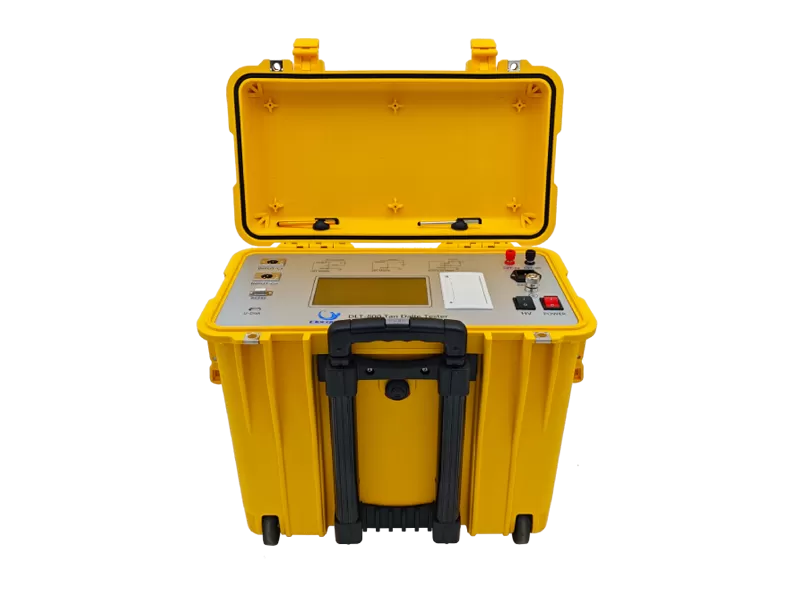
A Tan Delta Test is a diagnostic test that measures dielectric losses in transformer insulation to evaluate its overall condition and aging level. When AC voltage is applied to transformer insulation, a small amount of electrical energy is lost as heat. The Tan Delta value represents the ratio between resistive current and capacitive current within the insulation system.
A low Tan Delta value indicates healthy insulation, while a high value may suggest:
Because insulation failure accounts for a significant percentage of transformer outages worldwide, Tan Delta testing has become a standard practice during commissioning, maintenance, and condition assessment programs.
How Does a Transformer Tan Delta Test Work?
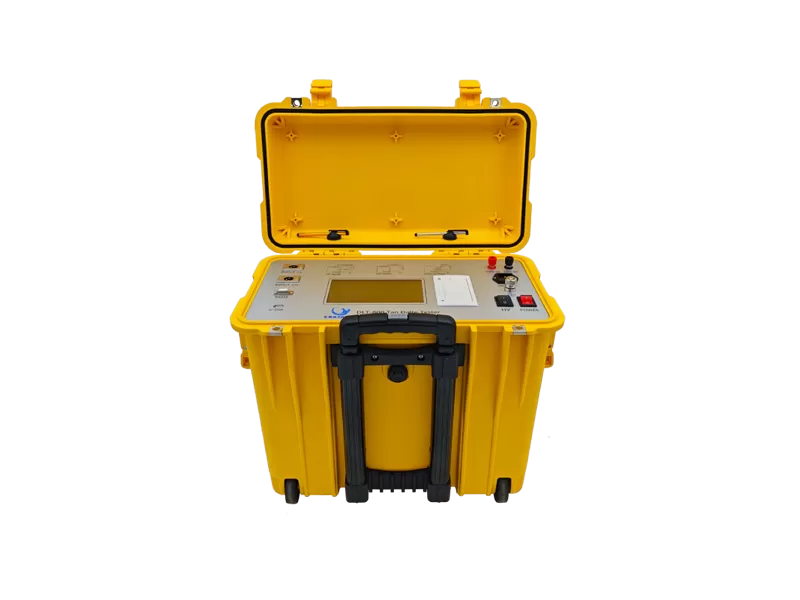
A transformer Tan Delta Test works by applying an AC test voltage and measuring dielectric losses within the insulation system. Under ideal conditions, transformer insulation behaves like a pure capacitor. However, real insulation materials contain impurities, moisture, and aging byproducts that create leakage current.
The test instrument measures:
Capacitance
Dissipation Factor (DF)
Power Factor (PF)
Tan Delta value
The higher the dielectric loss, the higher the measured Tan Delta.
Typical test voltages range from:
| Transformer Voltage Class | Typical Test Voltage |
| Distribution Transformer | 2 kV – 10 kV |
| Power Transformer | 10 kV – 12 kV |
| EHV Transformer | Up to 12 kV or higher |
Testing is usually performed on:
HV to Ground
LV to Ground
HV to LV insulation
Why Is Tan Delta Testing Important for Transformer Maintenance?
Tan Delta testing is important because it provides an early indication of insulation deterioration before catastrophic transformer failure occurs. Transformer insulation systems are expected to operate for 20–40 years under normal conditions. However, factors such as moisture contamination and excessive operating temperatures can significantly shorten service life.
Industry studies show that insulation-related failures account for approximately 60–70% of transformer failures in aging power systems.
A rising Tan Delta trend often indicates:
Increased moisture content
Oil contamination
Cellulose insulation degradation
Internal insulation defects
For this reason, utilities frequently include Tan Delta testing in predictive maintenance programs alongside Dissolved Gas Analysis (DGA) and insulation resistance testing.
Tan Delta Test vs Transformer Turns Ratio Test
Tan Delta testing and transformer turns ratio testing evaluate different aspects of transformer condition and should be considered complementary diagnostic methods. Although both tests are commonly performed during transformer maintenance, they serve different purposes.
| Parameter | Tan Delta Test | Transformer Turns Ratio Test |
| Main Purpose | Evaluate insulation condition | Verify winding ratio accuracy |
| Detect Moisture | Excellent | No |
| Detect Insulation Aging | Excellent | No |
| Detect Winding Defects | Limited | Excellent |
| Detect Tap Changer Issues | Limited | Excellent |
| Test Result | Tan Delta / Power Factor | Ratio Error (%) |
| Maintenance Value | Insulation Assessment | Electrical Verification |
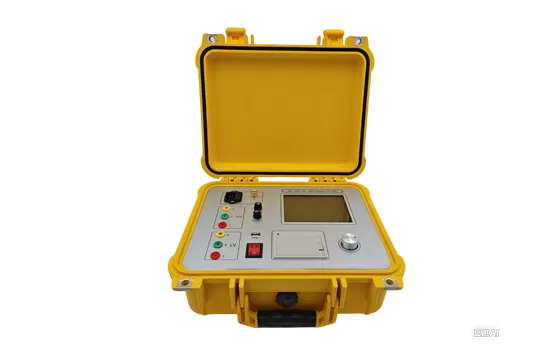
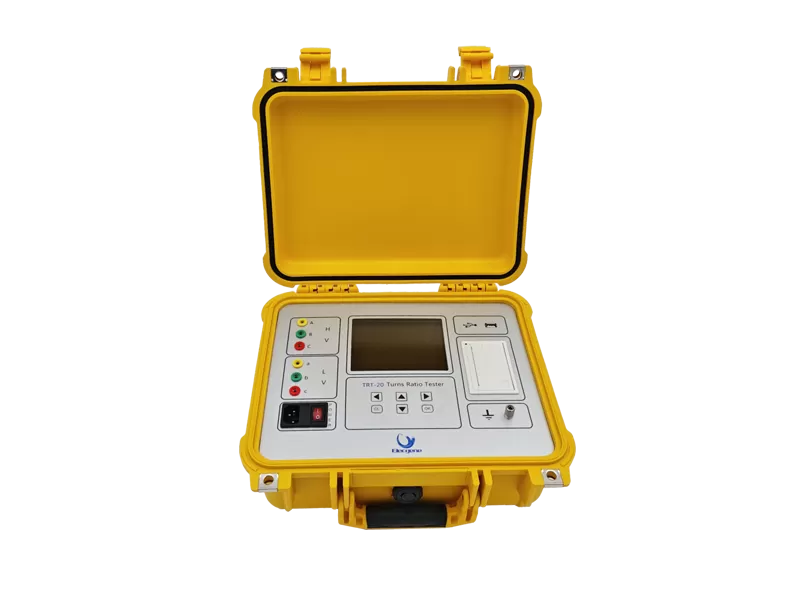
Many maintenance programs use a transformer turns ratio tester together with Tan Delta equipment to evaluate both winding integrity and insulation health during the same outage window. This combined approach improves diagnostic confidence and reduces the risk of unexpected transformer failures.
To learn more about the Transformer Turns Ratio Test, please refer to the following resources:
What is ratio test in transformer?
How to Interpret Tan Delta Test Results
Tan Delta results should be evaluated based on transformer design, voltage class, manufacturer recommendations, applicable IEC/IEEE standards, and historical test records. In practice, trend analysis is often more valuable than a single measurement because a gradual increase in Tan Delta over time may indicate insulation aging, moisture ingress, or contamination.
Engineers should evaluate Tan Delta results together with:
Dissolved Gas Analysis (DGA)
Insulation Resistance Test
Winding Resistance Test
Transformer Turns Ratio Test
For transformer maintenance best practices, technical guidance from Megger's transformer insulation testing resources provides additional insight:
Conclusion
Tan Delta testing is one of the most effective methods for evaluating transformer insulation condition and detecting early signs of aging, contamination, and moisture ingress. By measuring dielectric losses, maintenance teams can identify insulation problems before they lead to costly outages or catastrophic failures.
For the most comprehensive transformer condition assessment, Tan Delta testing should be combined with dissolved gas analysis, winding resistance measurements, and transformer turns ratio testing. Together, these diagnostic methods provide a complete picture of transformer health and support data-driven maintenance decisions.
Elecgene offers professional transformer testing equipment designed to help utilities, manufacturers, and industrial operators improve transformer reliability, reduce downtime, and extend asset service life.
FAQ
What is a good Tan Delta value for a power transformer?
Generally, a Tan Delta value below 0.5% is considered excellent, while values above 2% typically require further investigation.
What causes a high Tan Delta value?
Common causes include moisture contamination, insulation aging, oil degradation, dirt accumulation, and internal insulation defects.
How often should a transformer undergo Tan Delta testing?
Most utilities perform Tan Delta testing during commissioning and periodically every 3–5 years, depending on transformer criticality and operating conditions.
Can a Tan Delta Test detect winding faults?
Not directly. Winding-related issues are better identified using a transformer turns ratio tester and winding resistance testing equipment.
Is Tan Delta testing performed with the transformer energized?
No. The transformer must be de-energized and isolated before performing a Tan Delta test.
Why is Tan Delta testing used together with transformer turns ratio testing?
Tan Delta testing evaluates insulation condition, while transformer turns ratio testing verifies winding integrity. Together they provide a more complete transformer health assessment.

 English
  日本語
日本語  한국어
한국어  français
  Deutsch
  русский
  português
  العربية