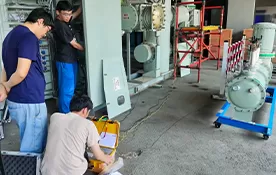
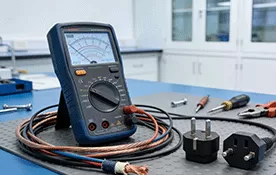
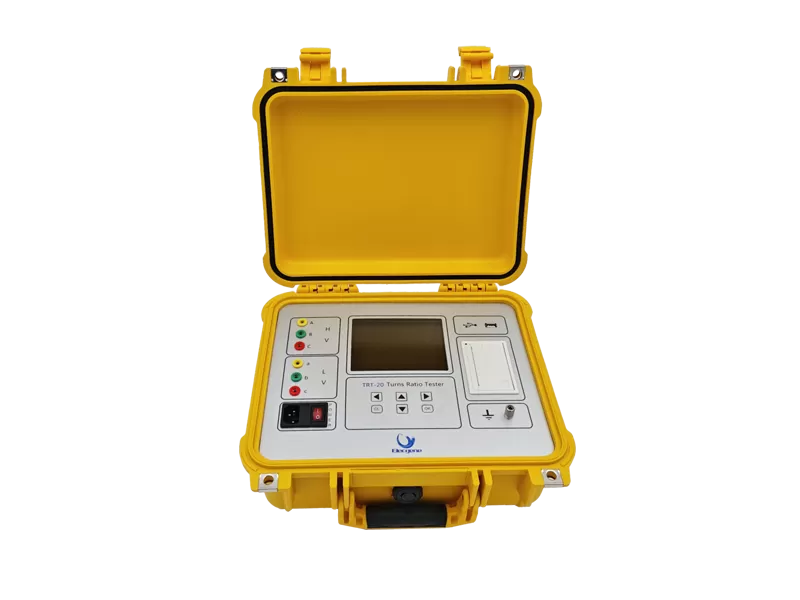
A transformer turns ratio test (TTR test) is a diagnostic test used to verify whether the winding turns ratio of a transformer matches its design specifications and nameplate values. The test compares the number of turns in the primary winding with the number of turns in the secondary winding by measuring the voltage ratio between them. Because transformer voltage ratio is directly proportional to turns ratio, even small deviations can indicate winding defects, tap changer problems, or manufacturing errors. Transformer turns ratio testing is one of the most important routine tests performed during transformer manufacturing, commissioning, maintenance, and troubleshooting.
Why Is Transformer Turns Ratio Testing Important?
Transformer turns ratio testing is important because it confirms the electrical integrity of transformer windings and ensures the transformer can operate safely and efficiently.
A power transformer may contain thousands of winding turns. Even a small winding fault can lead to:
Measured turns ratio values should be compared with transformer nameplate data and manufacturer specifications. Any deviation beyond the specified tolerance should be investigated to determine whether winding damage, tap changer issues, or connection errors are present. Measured turns ratio values should be compared with transformer nameplate data and manufacturer specifications. Any deviation beyond the specified tolerance should be investigated to determine whether winding damage, tap changer issues, or connection errors are present.
How Does a Transformer Turns Ratio Test Work?
A transformer turns ratio test works by applying a known voltage to one winding and measuring the induced voltage on another winding.
The basic transformer equation is:
VpVs=NpNsVsVp=NsNp
Where:
Vp = Primary Voltage
Vs = Secondary Voltage
Np = Primary Turns
Ns = Secondary Turns
For example:
If a transformer has:
Primary winding = 10,000 turns
Secondary winding = 1,000 turns
The expected turns ratio is: 10:1
If 100 V is applied to the primary side, approximately 10 V should appear on the secondary side.
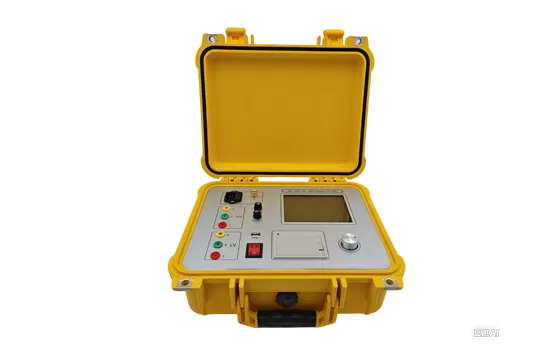
Modern transformer turns ratio testers automatically calculate:
This allows engineers to quickly determine whether the transformer is performing according to design specifications.
What Defects Can a Transformer Turns Ratio Test Detect?
A transformer turns ratio test can identify winding-related defects that affect transformer performance and reliability. According to a technical paper published by Megger, transformer turns ratio (TTR) testing is widely used to identify winding abnormalities, shorted turns, tap changer issues, and other conditions that may affect transformer performance.
The test is highly effective for detecting:
| Defect Type | Can TTR Detect? |
| Shorted Turns | Yes |
| Open Circuits | Yes |
| Wrong Tap Position | Yes |
| Tap Changer Problems | Yes |
| Manufacturing Errors | Yes |
| Incorrect Winding Connections | Yes |
| Core Faults | No |
| Insulation Moisture | No |
Because of these capabilities, TTR testing is often performed together with:
Combining these tests provides a more complete transformer condition assessment.
Transformer Turns Ratio Test Procedure
A transformer turns ratio test procedure follows a standardized sequence to ensure accurate and repeatable measurements. The testing procedure should follow applicable industry standards whenever possible. The internationally recognized IEC 60076 Power Transformer Standard includes requirements related to transformer routine testing, acceptance testing, and verification of transformer characteristics.
Step 1: Safety Inspection
Verify:
Transformer is de-energized
Grounding requirements are met
Test leads are properly connected
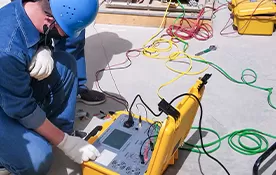
Step 2: Connect the Tester
Connect the transformer turns ratio tester to:
High-voltage winding
Low-voltage winding
according to the manufacturer's instructions.
Step 3: Configure Transformer Data
Input:
Transformer type
Vector group
Rated ratio
Tap position
Step 4: Start the Measurement
The tester injects a low test voltage and automatically calculates:
Ratio
Error percentage
Phase displacement
Step 5: Analyze Results
Compare measured values with:
Step 6: Generate Report
Save results for:
Maintenance records
FAT reports
SAT reports
Compliance documentation
Transformer Turns Ratio Test vs Winding Resistance Test
Transformer turns ratio testing and winding resistance testing evaluate different aspects of transformer health and should be used together for comprehensive diagnostics.
| Parameter | Turns Ratio Test | Winding Resistance Test |
| Purpose | Verify winding ratio | Verify winding continuity |
| Detects Shorted Turns | Excellent | Limited |
| Detects Tap Changer Issues | Excellent | Excellent |
| Test Duration | Fast | Moderate |
| Measures Resistance | No | Yes |
| Measures Voltage Ratio | Yes | No |
To learn more about the Winding Resistance Test, please refer to the following resources:
Conclusion
Transformer turns ratio testing is one of the most effective methods for verifying transformer winding integrity, identifying manufacturing defects, and detecting tap changer problems before they lead to costly failures. By using a high-accuracy transformer turns ratio tester, utilities, manufacturers, and maintenance teams can improve system reliability, reduce downtime, and ensure compliance with industry standards.
As part of a comprehensive transformer testing program, the turns ratio test should be combined with winding resistance testing, insulation testing, and SFRA analysis to achieve a complete understanding of transformer condition. Elecgene provides professional transformer testing equipment that helps engineers perform these tests accurately, efficiently, and confidently.
FAQ
1. What is an acceptable transformer turns ratio test result?
Most power and distribution transformers should have a measured ratio within ±0.5% of the nameplate value. Always refer to manufacturer specifications and applicable standards.
2. How often should a transformer turns ratio test be performed?
The test is commonly performed during factory acceptance testing (FAT), commissioning, scheduled maintenance, and after repairs or transportation.
3. Can a turns ratio test detect winding short circuits?
Yes. Shorted turns change the effective number of winding turns, causing measurable ratio deviations.
4. What is the difference between TTR testing and winding resistance testing?
TTR testing verifies the voltage-to-turns relationship, while winding resistance testing measures conductor resistance and connection integrity.
5. Is a transformer turns ratio tester safe for field use?
Yes. Modern testers use low-voltage excitation methods and are specifically designed for safe field and laboratory testing when used according to operating procedures.
6. Why is vector group verification included in modern transformer turns ratio testers?
Vector group verification confirms that transformer winding connections and phase displacement match design specifications, helping prevent commissioning errors and protection system malfunctions.

 English
  日本語
日本語  한국어
한국어  français
  Deutsch
  русский
  português
  العربية