Transformer winding resistance testing is one of the most important diagnostic procedures used during transformer manufacturing, commissioning, maintenance, and troubleshooting. By measuring the DC resistance of transformer windings, engineers can identify loose connections, damaged conductors, tap changer defects, and other hidden issues before they develop into costly failures.
According to industry maintenance guidelines, winding resistance test of transformers is a standard requirement in factory acceptance tests (FAT), site acceptance tests (SAT), and periodic transformer condition assessments. The test provides valuable insight into transformer winding integrity while helping utilities and manufacturers verify compliance with IEC and IEEE standards.
This guide explains the purpose, procedures, equipment, standards, result interpretation methods, and best practices for transformer winding resistance testing.
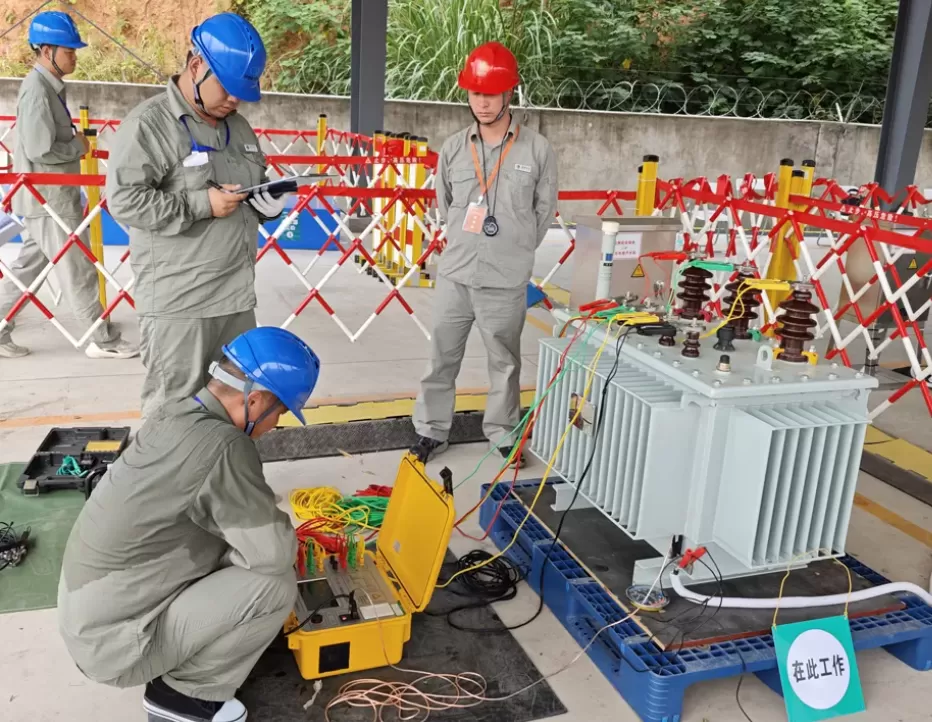
What Is a Transformer Winding Resistance Test?
A transformer winding resistance test is a diagnostic procedure that measures the DC resistance of transformer windings to evaluate conductor integrity, connection quality, and tap changer performance.
The resistance value of a transformer winding depends primarily on:
Conductor material
Winding length
Cross-sectional area
Temperature
Connection quality
When measured resistance differs significantly from expected values, it may indicate:
Because resistance changes with temperature, all measurements are typically corrected to a reference temperature before evaluation. Transformer winding resistance testing is required by both IEC 60076 and IEEE C57 transformer testing standards.
Why Is Winding Resistance Testing Important?
Winding resistance testing helps identify electrical and mechanical defects that cannot be detected through visual inspection alone.
One of the primary objectives is verifying the condition of the on-load tap changer (OLTC), which is among the most failure-prone components in a transformer.
The test helps detect:
| Potential Defect | Can Be Detected |
| Loose Connections | Yes |
| Broken Strands | Yes |
| High Contact Resistance | Yes |
| Tap Changer Defects | Yes |
| Incorrect Winding Connections | Yes |
| Core Defects | No |
Utilities frequently perform winding resistance measurements:
According to transformer maintenance studies published by IEEE, connection and contact-related issues account for a substantial portion of transformer service failures.
How Is a Transformer Winding Resistance Test Performed?
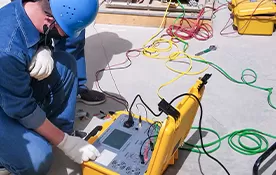
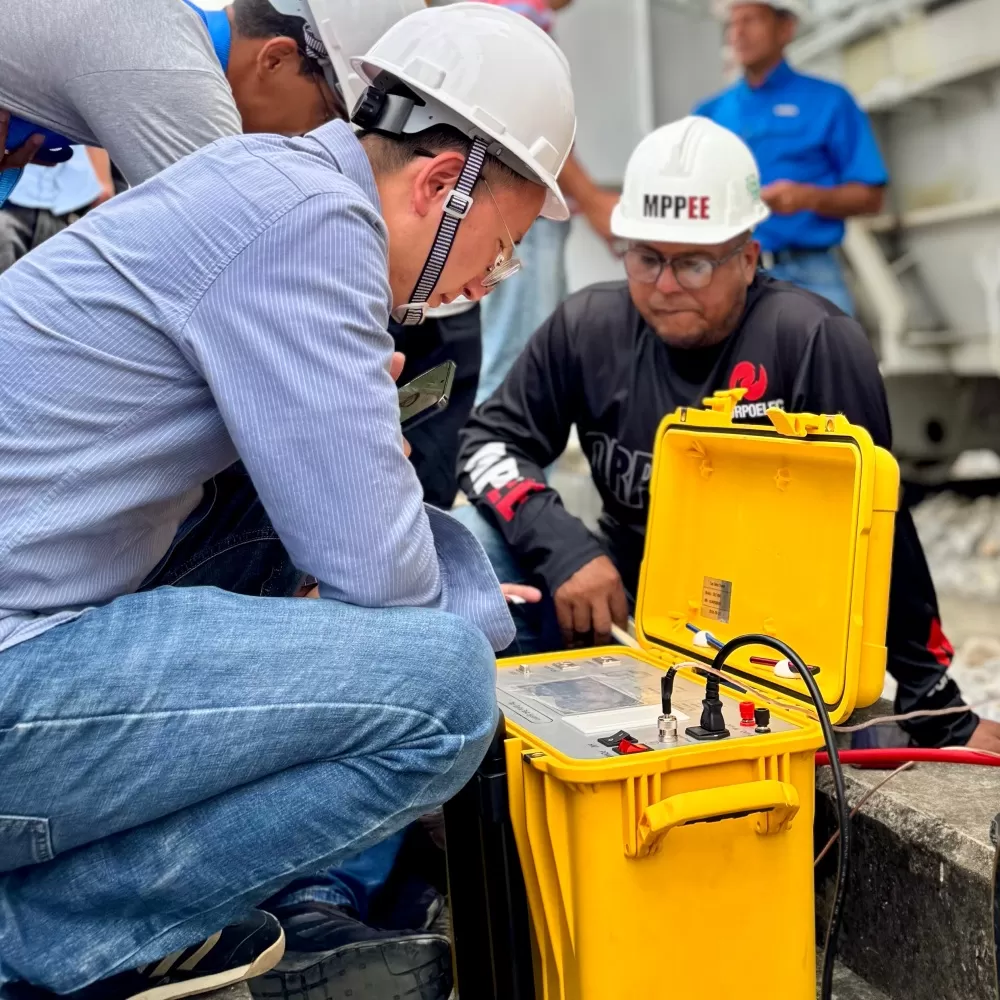
Transformer winding resistance testing is performed by injecting a stable DC current into the winding and measuring the resulting voltage drop to calculate resistance using Ohm's Law.
The basic formula is:
Resistance (R) = Voltage (V) ÷ Current (I)
Standard Testing Procedure
Step 1: De-Energize the Transformer
The transformer must be completely isolated and grounded according to safety procedures.
Step 2: Connect the Test Instrument
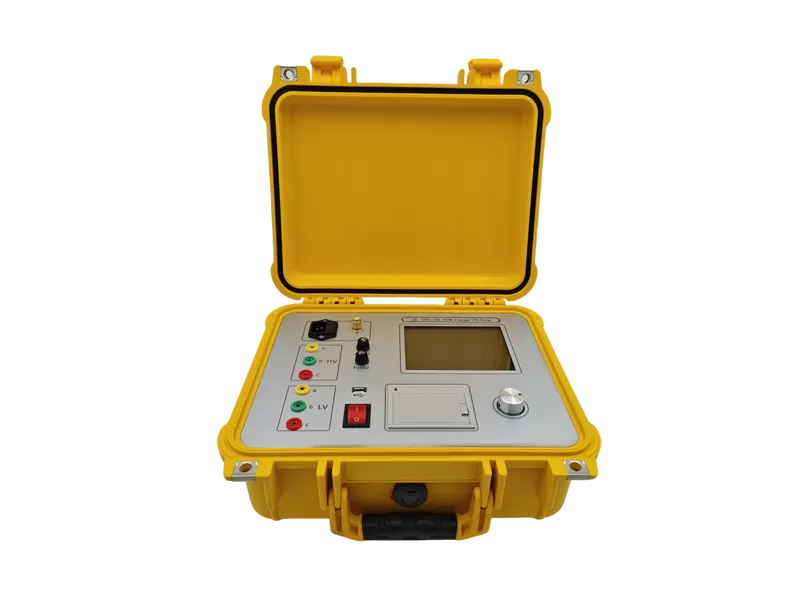
A winding resistance tester injects a known DC current into the winding under test.
Step 3: Wait for Current Stabilization
Large power transformers may require several minutes before the magnetic circuit stabilizes.
For transformers above 100 MVA, stabilization can exceed 10 minutes.
Step 4: Record Resistance Values
Measurements are performed on:
Step 5: Test All Tap Positions
OLTC-equipped transformers must be tested across all tap positions.
Step 6: Correct Values to Reference Temperature
Results are converted to a common temperature for comparison.
Typical Test Current Ranges
| Transformer Size | Test Current |
| Distribution Transformer | 1–10 A |
| Medium Power Transformer | 10–50 A |
| Large Power Transformer | 50–100 A+ |
How to Interpret Winding Resistance Test Results
Winding resistance test results are evaluated by comparing phase-to-phase measurements, historical records, and manufacturer reference values. The most important evaluation criteria include:
Phase Balance
For three-phase transformers, resistance values should be relatively balanced.
Typical acceptance criteria:
Temperature Correction
Copper resistance changes approximately 0.393% per °C.
Failure to correct measurements may lead to inaccurate conclusions.
Tap Changer Evaluation
Sudden resistance changes between tap positions may indicate:
Worn contacts
Carbon deposits
Mechanical wear
Trend Analysis
The most valuable diagnostic approach is long-term trending.
If resistance values increase over time, engineers should investigate:
Connection deterioration
Contact oxidation
Thermal damage
Choosing the Right Transformer Winding Resistance Tester
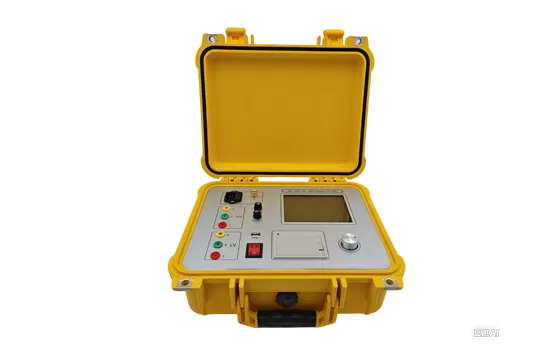
The best winding resistance tester combines high current capability, fast measurement speed, temperature compensation, and accurate reporting functions.
When selecting equipment, key specifications include:
| Feature | Recommended |
| Output Current | Up to 100 A or higher |
| Measurement Resolution | Micro-ohm level |
| Automatic Temperature Correction | Yes |
| OLTC Testing Capability | Yes |
| Data Storage | Yes |
| Report Generation | Yes |
For utilities and transformer manufacturers, advanced instruments significantly reduce testing time on large transformers while improving diagnostic accuracy.
Elecgene provides professional transformer winding resistance testing solutions designed for:
Utilities
Transformer Manufacturers
EPC Contractors
Transformer Service Providers
Renewable Energy Projects
Conclusion
Transformer winding resistance testing is a fundamental diagnostic tool for assessing transformer health, verifying winding integrity, and identifying potential failures before they lead to costly outages. Whether performed during manufacturing, commissioning, routine maintenance, or troubleshooting, accurate resistance measurements provide critical information about winding condition and tap changer performance.
By following IEC and IEEE testing standards and using advanced instruments from trusted suppliers such as Elecgene, utilities and transformer manufacturers can improve transformer reliability, reduce maintenance costs, and extend asset service life.
FAQ
What is the purpose of a transformer winding resistance test?
The test verifies winding integrity and identifies defects such as loose connections, damaged conductors, and tap changer problems.
How often should winding resistance testing be performed?
Most utilities perform the test during commissioning and at regular maintenance intervals ranging from one to five years.
What is an acceptable winding resistance deviation?
Generally, phase-to-phase deviation should remain within approximately 2%, unless manufacturer specifications indicate otherwise.
Why must winding resistance be corrected for temperature?
Resistance varies with conductor temperature. Correcting measurements ensures accurate comparisons with historical records and factory values.
Can winding resistance testing detect insulation problems?
No. Insulation condition is typically assessed through insulation resistance testing, dielectric testing, or partial discharge measurements.
What equipment is used for winding resistance testing?
A transformer winding resistance tester injects a controlled DC current and measures voltage drop to calculate winding resistance accurately.

 English
  日本語
日本語  한국어
한국어  français
  Deutsch
  русский
  português
  العربية