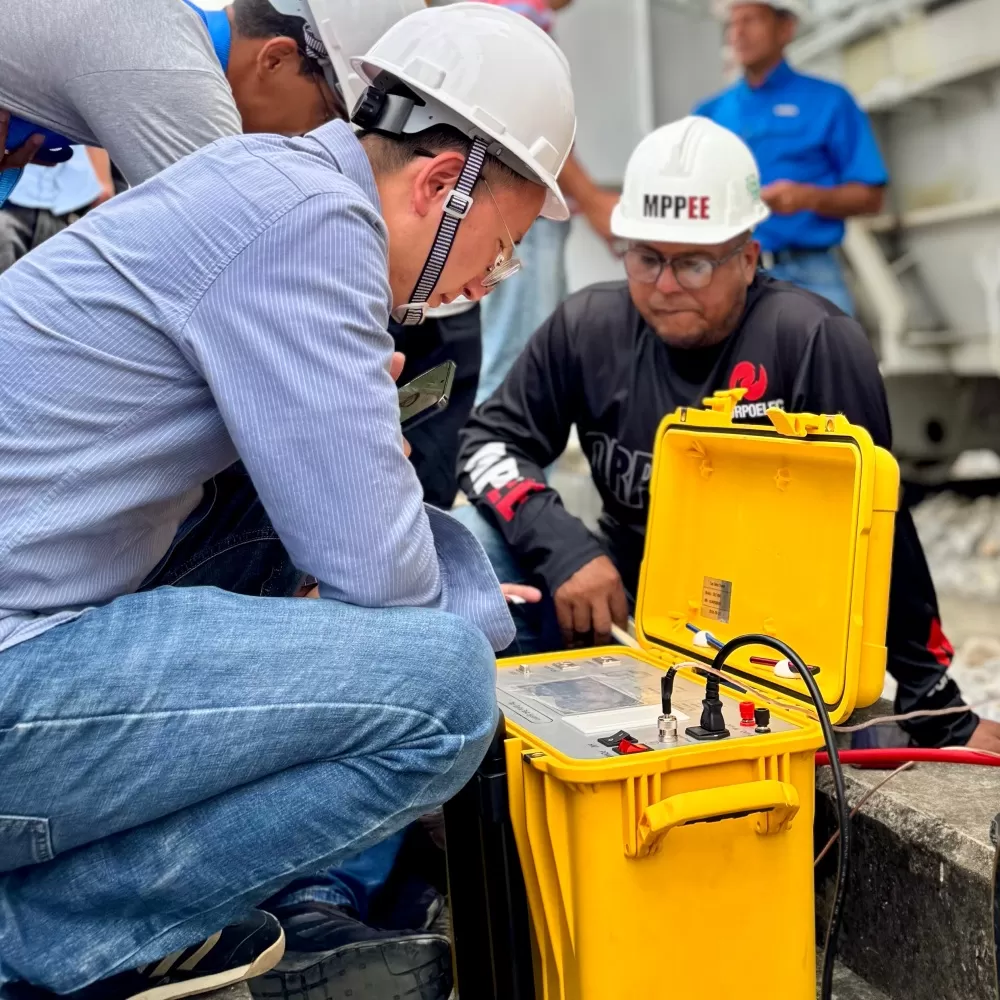
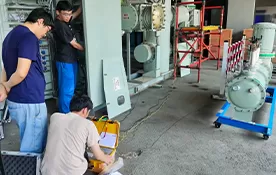
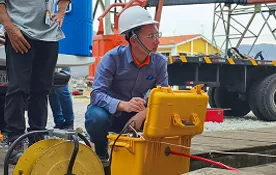
Different frequency ranges in SFRA testing indicate which transformer parts are most likely influencing the response curve, such as the core, main windings, tap windings, leads and connections. SFRA is not a simple pass/fail test; engineers interpret curve changes by comparing a new sweep with a baseline, sister unit or phase-to-phase reference.
SFRA is widely used after transformer transportation, short-circuit events, fault investigation, commissioning and routine condition assessment. The method is standardized because IEC 60076-18 specifies frequency response measurement techniques and equipment for power transformers, including factory and on-site testing applications.
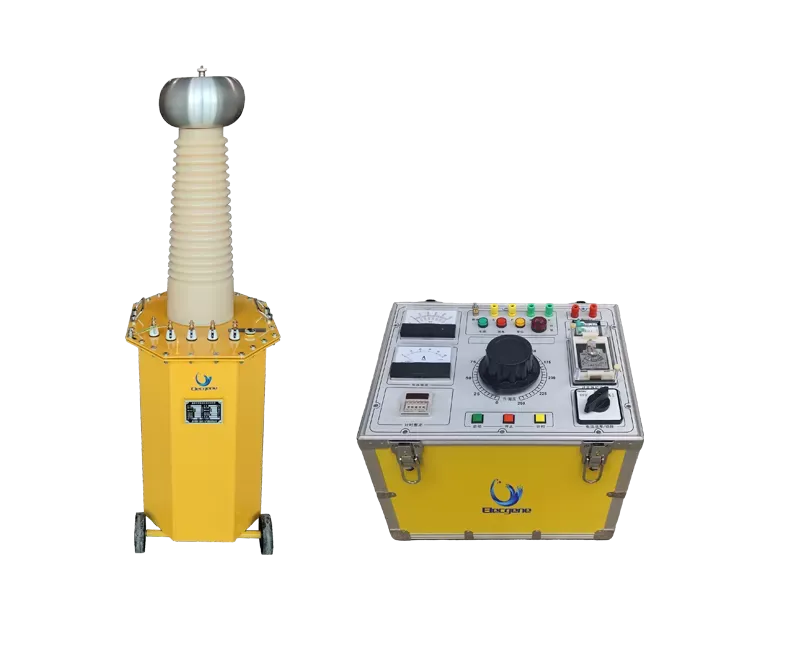
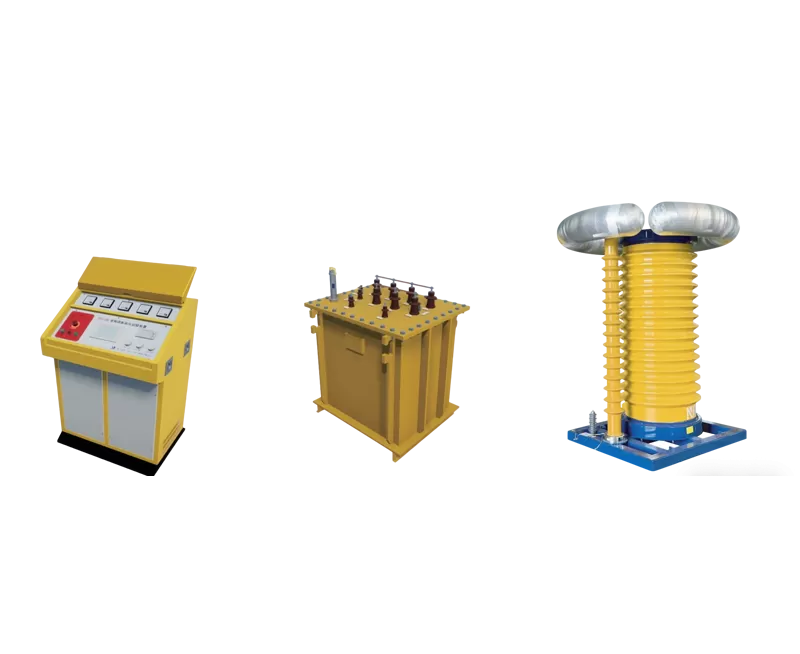
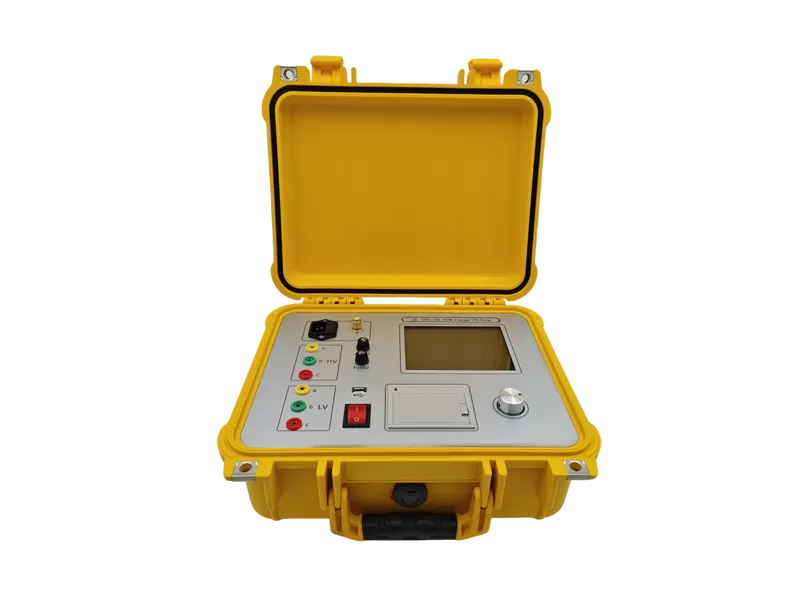
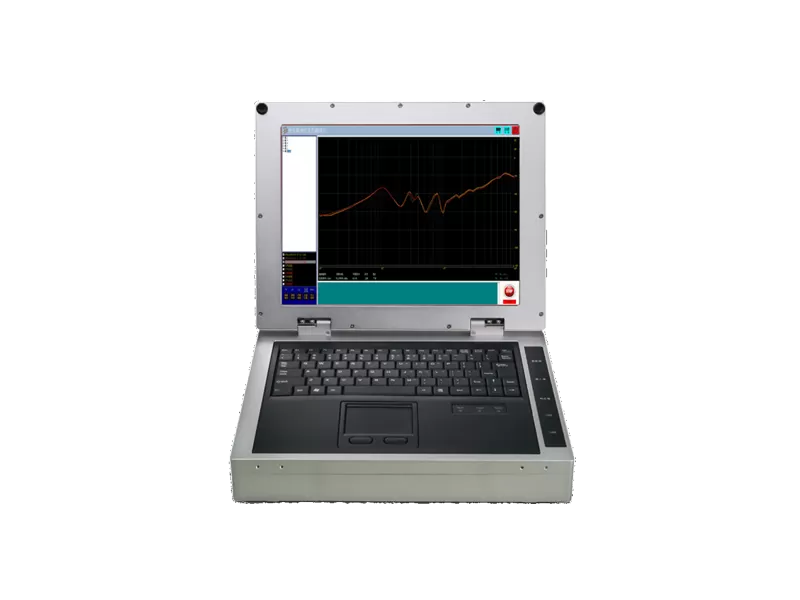
Elecgene provides the WDT-200 Sweep Frequency Response Analyser, Power Transformer Testing Equipment and Transformer Insulation Testing Tool for transformer factories, substations, utilities and electrical service teams.
What Is SFRA Testing?
SFRA testing is a diagnostic method that injects a low-voltage swept-frequency signal into a transformer winding and measures the response to detect mechanical or electrical changes inside the transformer. The transformer behaves like a complex RLC network, so changes in inductance, capacitance or resistance can shift the frequency response curve.
In practice, an SFRA test often sweeps from about 20 Hz to 2 MHz, while Elecgene’s WDT-200 provides a wider 10 Hz–16 MHz frequency sweep range, with 30 MHz optional, and a measuring dynamic range of -120 dB to 20 dB.
The most valuable SFRA result is usually not one isolated curve. As Megger explains, meaningful SFRA diagnosis comes from comparing the current trace with a previous fingerprint, a similar transformer or phase-to-phase response under consistent test conditions.
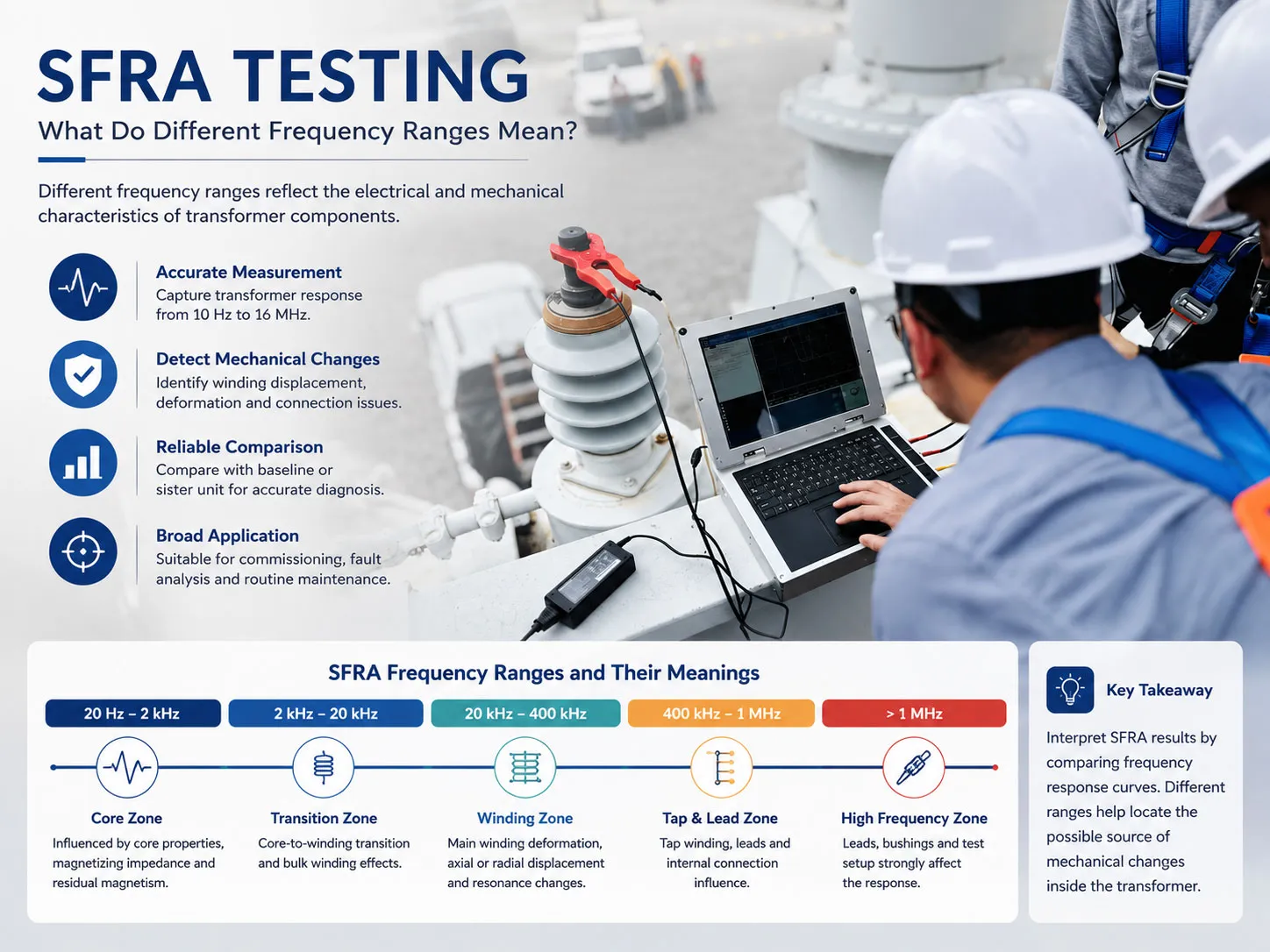
Low Frequency Range: Core and Bulk Winding Effects
The low frequency range in SFRA testing is mainly associated with transformer core behavior, magnetizing impedance, residual magnetism and some bulk winding effects. In many practical references, the very low and low range is treated as approximately 20 Hz to 10 kHz, although exact boundaries depend on transformer design.
In open-circuit SFRA tests, this area is strongly influenced by the core. Problems such as core movement, open circuits, shorted turns or residual magnetism may appear as curve shifts in lower frequencies. Megger’s SFRA frequency guide lists 20 Hz to 2 kHz as a range associated with main core deformation, open circuits, shorted turns and residual magnetism.
Engineers should be careful when interpreting this zone. DC winding resistance tests, residual magnetism and tap position can change the low-frequency response, so test sequence and transformer condition should be recorded carefully.
Middle Frequency Range: Main Winding Movement and Deformation
The middle frequency range in SFRA testing is mainly associated with the main transformer windings, including bulk winding movement, axial displacement, radial deformation and winding-to-winding interaction. A commonly used practical range is from several kHz to several hundred kHz.
For an open-circuit SFRA test, Megger notes that the windings influence the response most in the 2 kHz to 500 kHz midrange, while its detailed FAQ links 20 kHz to 400 kHz with deformation within the main windings. This is why engineers often pay close attention to resonance peak shifts in this region after short-circuit faults or transport shock.
A shift, missing resonance, new resonance or large magnitude deviation in the mid-frequency band may indicate mechanical changes. However, interpretation should not rely on one band alone. CIGRE notes that FRA interpretation has historically relied on comparison and expert judgment, and later work has aimed to improve interpretation methods and numerical indices.
High Frequency Range: Tap Windings, Leads and Connections
The high frequency range in SFRA testing is mainly associated with tap windings, winding leads, internal connections, bushings and measurement setup effects. In many transformer tests, the high-frequency zone begins around a few hundred kHz and may extend to 1 MHz, 2 MHz or higher, depending on the transformer and test instrument.
Megger’s guidance links 400 kHz to 1 MHz with tap winding effects and notes that at very high frequencies the instrument setup and connections become increasingly influential, especially above 1 MHz for transformers above 72.5 kV and above 2 MHz for transformers 72.5 kV and below.
This is why grounding, cable layout and clamp position matter so much. Poor grounding or inconsistent lead routing can create false differences in the high-frequency region. For repeatable testing, the same connection method, tap position, bushing condition and oil level should be maintained whenever possible.
SFRA Frequency Range Interpretation Table
SFRA frequency range interpretation is a practical diagnostic framework, not a fixed rule that applies identically to every transformer. The table below summarizes common frequency-band meanings used in transformer field testing.
| Frequency Range | Main Influencing Area | Possible Indications | Interpretation Tip |
| 20 Hz–2 kHz | Core, residual magnetism, open circuits | Core deformation, residual magnetism, shorted turns | Compare with same test condition and avoid DC magnetization effects |
| 2 kHz–20 kHz | Core-to-winding transition, bulk winding | Bulk winding movement, shunt impedance changes | Check open and short-circuit traces together |
| 20 kHz–400 kHz | Main windings | Radial or axial winding deformation, winding displacement | Look for resonance shifts, missing peaks or new peaks |
| 400 kHz–1 MHz | Tap winding, leads, connections | Tap winding issue, internal lead or connection change | Confirm tap position and connection repeatability |
| Above 1–2 MHz | Leads, bushings, test setup | Poor grounding, cable routing influence, terminal connection issue | Recheck clamps, ground braid and test cable layout |
Because each transformer design has its own response, the frequency bands should be used as a guide rather than a diagnosis by themselves. The CIGRE work on transformer FRA interpretation is useful because it explains why measurement standardization, reference comparison and interpretation experience are all important in SFRA diagnostics.
How to Improve SFRA Test Reliability in the Field
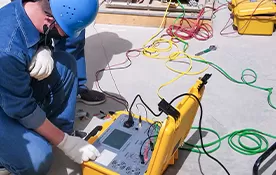
Reliable SFRA testing depends on repeatable connections, correct grounding, consistent tap position, stable transformer condition and clear test records. Because SFRA is highly sensitive, small setup differences can look like transformer changes if the test is not controlled.
Before testing, isolate the transformer, record tap position, document oil level and bushing condition, and use the same lead routing whenever possible. Megger notes that SFRA is sensitive enough that extra connections such as bus connections can significantly change the response, especially at higher frequencies.
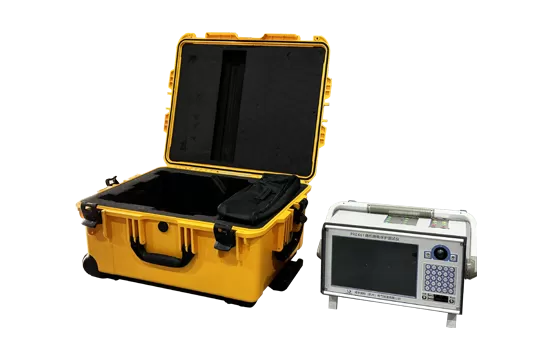
Elecgene’s WDT-200 is built into a tough carry case with an on-board computer and large bright screen for field use. It weighs 4.5 kg net and supports data storage and USB download, making it practical for substation, factory and service-team transformer diagnosis.
Conclusion
Different SFRA frequency ranges help engineers understand whether curve changes are more likely related to the core, main windings, tap windings, leads, connections or test setup. Low frequencies are often core-dominated, middle frequencies are winding-dominated, and high frequencies are more sensitive to taps, leads, bushings and grounding.
For reliable transformer diagnostics, SFRA should be performed with consistent connections and compared against a baseline, sister unit or phase response. Elecgene supports transformer condition assessment with the WDT-200 SFRA analyser and a wider transformer testing portfolio, helping utilities, substations and service teams identify possible mechanical damage before failure escalates.
FAQ About SFRA Frequency Ranges
1. What does SFRA testing measure?
SFRA measures a transformer’s frequency response by injecting a swept-frequency signal and recording how the transformer winding network responds across low to high frequencies.
2. What does the low frequency range mean in SFRA?
The low frequency range is mainly influenced by the transformer core, residual magnetism, magnetizing impedance and some bulk winding behavior.
3. Which SFRA frequency range shows winding deformation?
Winding deformation often appears in the middle frequency range, especially around tens of kHz to several hundred kHz, but interpretation must be based on comparison.
4. Why is the high frequency range sensitive to test setup?
High frequencies are strongly affected by leads, grounding, clamps, bushings and cable routing, so inconsistent setup may create false curve differences.
5. What frequency range does the Elecgene WDT-200 support?
The Elecgene WDT-200 supports a frequency sweep range of 10 Hz–16 MHz, with 30 MHz optional.
6. Can SFRA results be interpreted without a baseline?
Yes, but interpretation is more difficult. A baseline fingerprint from commissioning or factory testing gives the strongest reference for future comparison.

 English
  日本語
日本語  한국어
한국어  français
  Deutsch
  русский
  português
  العربية