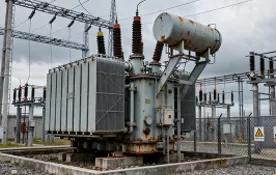
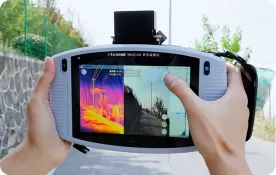
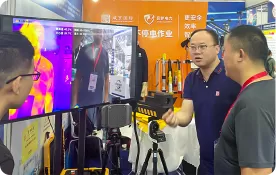
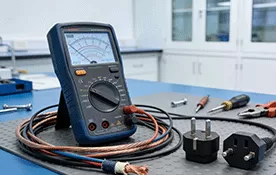
Sweep frequency response analysis is a transformer diagnostic method used to detect mechanical changes in windings, core structures and internal connections by measuring how a transformer responds to a swept frequency signal. In transformer maintenance, SFRA is especially useful after transportation, short-circuit events, through-faults, earthquakes, major repairs or abnormal protection trips. Unlike routine electrical tests that focus on insulation resistance, turns ratio or winding resistance, SFRA creates a frequency-domain “fingerprint” of the transformer. By comparing curves over time, engineers can identify possible winding movement, deformation, shorted turns, open windings, broken clamping structures, core movement and faulty core grounding. Elecgene provides power transformer testing equipment for transformer diagnostics, commissioning and field maintenance.
What Is Sweep Frequency Response Analysis?
Sweep frequency response analysis is a non-invasive transformer test that injects a low-voltage frequency-swept signal into a winding and measures the output response across a wide frequency range. The result is a curve showing how the transformer’s internal electrical network behaves at different frequencies.
A transformer winding, core, insulation system and clamping structure form a complex network of resistance, inductance and capacitance. When the internal geometry changes, the frequency response curve can shift. This is why SFRA is valuable for detecting mechanical damage that may not be obvious from visual inspection or basic electrical tests.
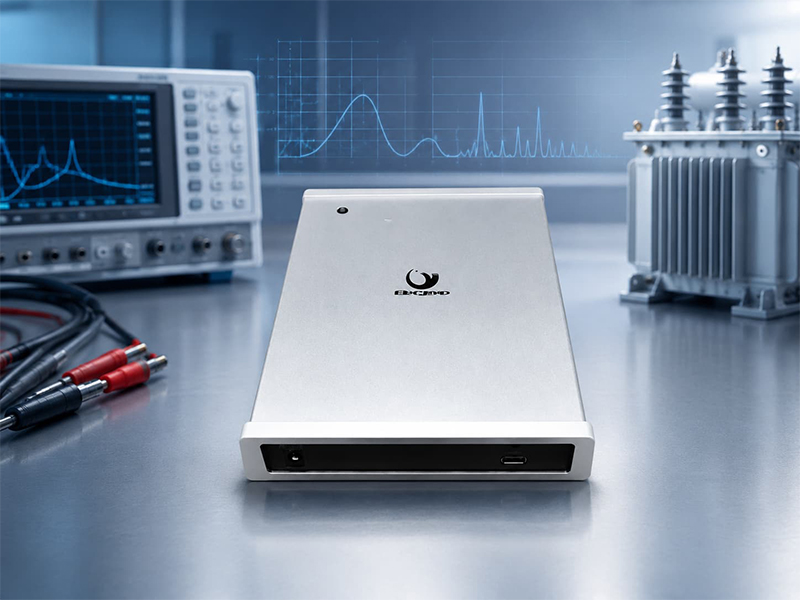
The IEC 60076-18 measurement of frequency response standard covers measurement technique and measuring equipment when frequency response measurement is required in the factory or on site. Elecgene’s Mini-WDT sweep frequency response analyzer is listed as compliant with IEC 60076-18 and is designed to evaluate whether a transformer has suffered mechanical damage.
How Does SFRA Transformer Testing Work?
SFRA transformer testing works by applying a sinusoidal signal with continuously changing frequency to one transformer terminal and measuring the returned signal at another terminal. The analyzer calculates the transfer function and displays it as amplitude versus frequency.
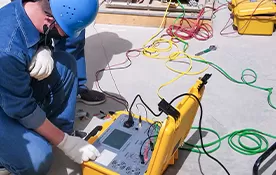
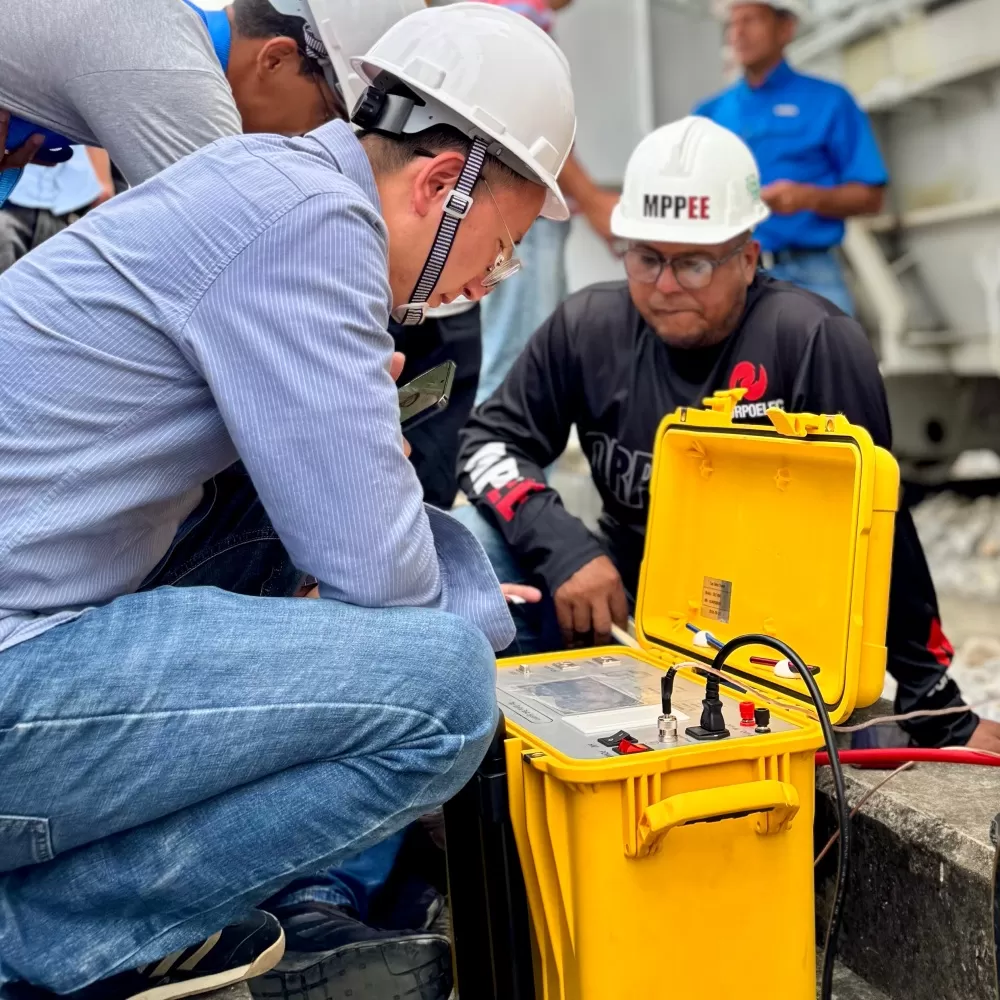
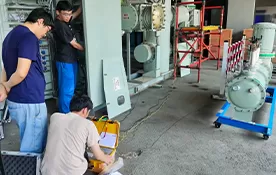
A typical SFRA test starts with the transformer de-energized, isolated, grounded and prepared according to site safety procedures. Test leads are connected using repeatable grounding and terminal arrangements because connection quality strongly affects high-frequency results. The analyzer then sweeps through the selected frequency range and records the response curve.
Elecgene’s WDT-200 / Mini-WDT specification lists a frequency sweep range of 10 Hz to 16 MHz, with 30 MHz optional, output impedance of 50Ω, input impedance of 1MΩ, dynamic measurement range of -120 dB to 20 dB, and operating temperature from -10°C to 50°C. These numbers matter because transformer SFRA testing depends on wide frequency coverage, stable signal output and repeatable measurement setup.
How to Interpret SFRA Curves
SFRA curve interpretation is the process of comparing frequency-response traces to detect meaningful deviation caused by transformer mechanical or electrical changes. The best interpretation usually comes from comparison with a factory baseline, previous field record, sister unit or adjacent phase.
Low-frequency regions are often influenced by core magnetization and winding inductance. Mid-frequency regions are commonly associated with winding geometry and inter-winding capacitance. High-frequency regions are more sensitive to lead connections, tap connections, grounding arrangement and measurement setup. Because boundaries vary by transformer design, SFRA interpretation should not rely on one universal frequency map.
| Frequency Region | What It May Reflect | Common Interpretation Concern |
|---|
| Low frequency | Core, magnetizing inductance and bulk winding behavior | Core condition, residual magnetism or connection mismatch |
| Mid frequency | Winding movement and inter-winding capacitance | Axial or radial deformation, displacement |
| High frequency | Leads, terminals, tap connections and grounding | Poor grounding, lead movement, measurement repeatability |
| Full curve comparison | Overall transformer fingerprint | Mechanical change after fault, transport or repair |
The IEEE C57.149-2024 FRA guide is a key reference for application and interpretation of frequency response analysis for oil-immersed transformers. CIGRE also published advances in transformer FRA interpretation, showing that interpretation is an expert diagnostic process rather than a simple pass-or-fail reading.
SFRA vs Other Transformer Tests
SFRA is best used with other transformer tests because it focuses on mechanical and frequency-response changes, not every transformer failure mode. A complete transformer condition assessment usually combines SFRA with winding resistance, turns ratio, insulation resistance, power factor, excitation current, oil testing and dissolved gas analysis.
| Test Method | Main Purpose | What It Detects Best | Limitation |
|---|
| SFRA | Mechanical integrity and winding fingerprint | Winding movement, core shift, clamping issues | Needs comparison and expert interpretation |
| Winding Resistance | DC resistance of windings | Loose joints, tap-changer contact problems | Limited mechanical diagnosis |
| Turns Ratio Test | Voltage ratio and vector relationship | Wrong turns ratio, tap issues, winding errors | Does not show winding deformation clearly |
| Insulation Resistance | Insulation condition to ground | Moisture, contamination, insulation weakness | Not a mechanical fingerprint |
| Excitation Current | Core and winding magnetic behavior | Core defects, winding short issues | Less detailed than SFRA for geometry change |
| Oil/DGA Test | Oil and gas condition | Thermal and electrical faults in oil-filled units | Does not directly locate winding movement |
Elecgene’s Electrical Testing Tools portfolio includes transformer testing, insulation testing, protection testing, circuit breaker testing and CT/PT testing instruments. For broader diagnosis, Elecgene also provides Insulation Testing Tool solutions that complement SFRA by evaluating insulation condition and dielectric performance.
How to Choose an SFRA Analyzer
Choosing an SFRA analyzer means evaluating frequency range, dynamic range, connection repeatability, software comparison tools, portability, report generation and field usability. A good analyzer should help engineers collect repeatable curves and compare them clearly against historical records.
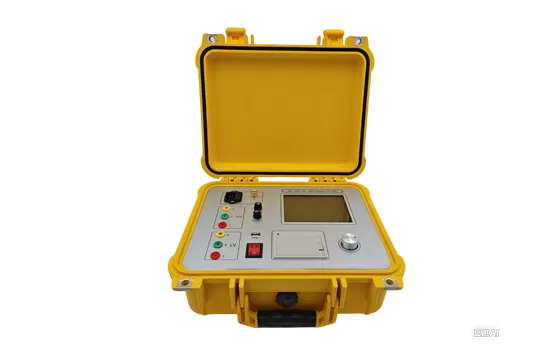
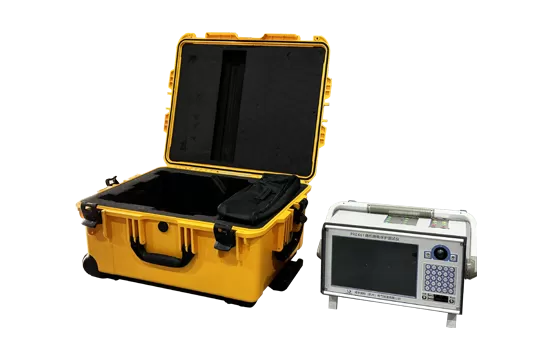
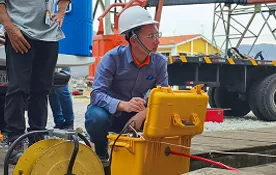
For field teams, portability matters. Elecgene’s Mini-WDT is described as portable and lightweight, with analysis software for further diagnostics and reproducible results supported by connection technique. The WDT-200 version is built into a tough carry case with an onboard computer, bright screen, hard-drive storage and USB data download, making it practical for site testing.
Before purchasing, buyers should confirm the required standard, transformer voltage class, number of transformers to be tested, baseline data availability, report format, software comparison functions, outdoor screen visibility, lead design and service support. For utilities and industrial maintenance teams, the analyzer should also support repeatable connection diagrams and clear curve overlay functions.
Conclusion
Sweep frequency response analysis is one of the most useful transformer diagnostic tests for identifying mechanical changes in windings, core structures and internal connections. It is especially valuable after transport, short-circuit stress, severe through-faults, overhaul or unexplained protection events. SFRA is powerful because it creates a transformer fingerprint, but it should not be interpreted in isolation. The best results come from repeatable measurement technique, baseline comparison and combination with other transformer tests. Elecgene provides Mini-WDT sweep frequency response analyzers, transformer testing tools and insulation testing instruments to support transformer commissioning, maintenance and fault investigation.
FAQ
1. What is sweep frequency response analysis?
Sweep frequency response analysis is a transformer diagnostic test that injects a swept-frequency signal into a winding and measures the response to detect mechanical or electrical changes.
2. What problems can SFRA detect?
SFRA can help detect winding deformation, winding displacement, shorted turns, open windings, broken clamping structures, core movement, core connection issues and transport-related mechanical damage.
3. Is SFRA a pass-or-fail test?
Not usually. SFRA is mainly a comparative diagnostic test. Engineers compare present curves with factory baselines, historical results, adjacent phases or similar transformers.
4. When should transformer SFRA testing be performed?
SFRA is commonly performed after transportation, short-circuit events, through-faults, transformer relocation, major overhaul, abnormal protection trips or suspected mechanical damage.
5. Why is connection repeatability important in SFRA?
Connection repeatability is critical because lead position, grounding and terminal arrangement can affect high-frequency results and may create misleading curve differences.
6. Why choose Elecgene SFRA equipment?
Elecgene provides Mini-WDT sweep frequency response analyzers and transformer testing tools designed for IEC 60076-18 compliant transformer diagnostics, field portability, software analysis and repeatable measurement results.

 English
  日本語
日本語  한국어
한국어  français
  Deutsch
  русский
  português
  العربية