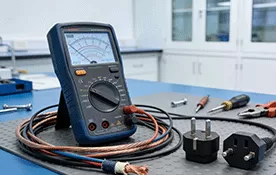
A micro-ohmmeter is a precision low-resistance tester used to measure very small resistance values in electrical contacts, busbars, circuit breakers, disconnectors, grounding joints, welds, cables and high-current connections. It is widely used in substations, switchgear maintenance, power plants, rail systems, industrial facilities and manufacturing quality control. The reason micro-ohm testing matters is simple: a small increase in contact resistance can create heat, voltage drop and energy loss in high-current circuits. For example, a 100 µΩ joint carrying 100 A creates a voltage drop of 10 mV and dissipates 1 W of heat. At higher currents, the same joint can become a serious reliability risk. Elecgene provides electrical testing instruments for power-system commissioning, maintenance and diagnosis.
What Is a Micro-Ohmmeter?
A micro-ohmmeter is an instrument that measures resistance in the micro-ohm or milliohm range by injecting a known current and measuring the resulting voltage drop.
Unlike a standard multimeter, a micro-ohmmeter is designed for very low resistance values where test-lead resistance, contact resistance and thermal effects can easily distort the result. Most professional micro-ohmmeters use the four-wire Kelvin method, where two leads inject test current and two separate sense leads measure voltage directly across the test object.
How Does a Micro-Ohmmeter Work?
A micro-ohmmeter works by applying a stable test current through the object under test, measuring the small voltage drop across it, and calculating resistance using Ohm’s law: R = V / I.
In a typical test, the current leads are connected outside the voltage-sense leads. The current source forces current through the joint, breaker contact or conductor, while the sense circuit measures voltage at the actual test points. Because the voltage-sense circuit draws very little current, the voltage drop in the sense leads has minimal effect on the measured value.
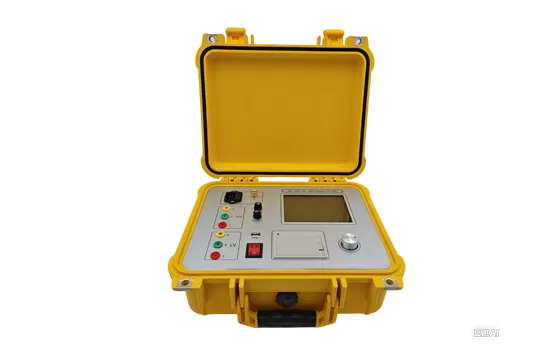
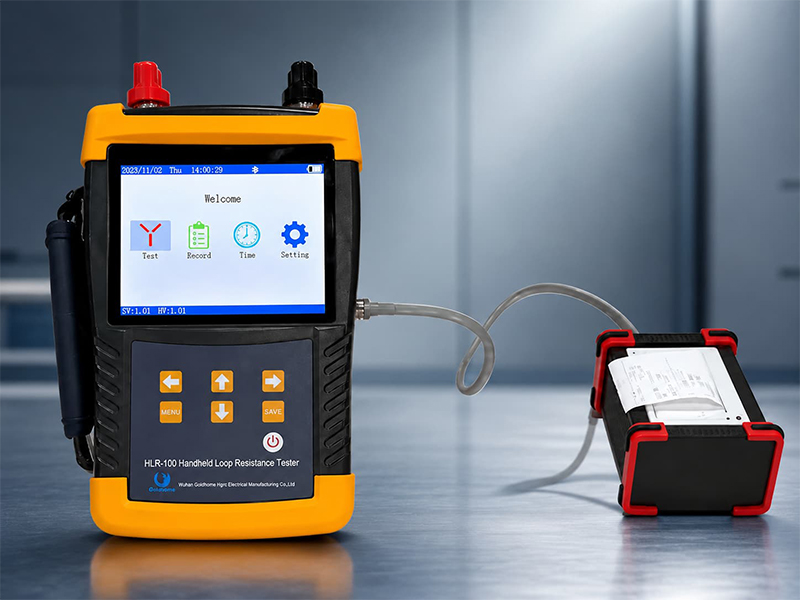
This is why Kelvin connection is essential. In a two-wire measurement, lead resistance is added to the reading. In a four-wire measurement, lead resistance is mostly excluded, which makes readings in the µΩ and mΩ range more reliable. Elecgene’s HLR-100 hand-held 100A micro-ohmmeter is listed with 0.1 µΩ resolution, 0.1 µΩ to 20 mΩ measurement range, ±(reading × 0.5% + 1 µΩ) accuracy, 30A–100A current output options, built-in lithium battery and about 1.7 kg net weight without test cables.
Main Applications of Micro-Ohmmeters
Micro-ohmmeters are used to detect abnormal resistance in high-current electrical paths before overheating, voltage drop or equipment failure occurs. Common applications include circuit breaker contact resistance, switchgear joints, busbar connections, disconnectors, ground bonds, fuses, cable lugs, welding points, battery links, motor connections and transformer winding-related low-resistance checks. ASTM provides B539 standard test methods for measuring resistance of electrical connections, showing that contact and connection resistance is a recognized testing topic in electrical reliability work.
For switchgear and breaker maintenance, micro-ohm testing is often paired with timing, travel and coil analysis. Elecgene’s Power Protection Testing range includes HLR-100 and HLR-200 micro-ohmmeters, relay test systems and circuit breaker testing tools for substations, switchboards and industrial facilities.
Micro-Ohmmeter Selection Comparison Table
Micro-ohmmeter selection means matching test current, resistance range, resolution, portability, battery capacity, reporting and safety features to the equipment being tested.
| Selection Factor | Why It Matters | Practical Buyer Guidance |
|---|
| Test Current | Higher current improves signal level for very low resistance | 100A is common for field contact resistance; 200A may be preferred for larger equipment |
| Resistance Range | Must cover expected contact and joint values | Look for µΩ to mΩ coverage for breakers and busbars |
| Resolution | Determines small-change visibility | 0.1 µΩ resolution is useful for trend comparison |
| Accuracy | Affects confidence in acceptance decisions | Check accuracy formula, not only display digits |
| Four-Wire Kelvin Leads | Reduces lead and contact error | Required for reliable low-resistance testing |
| Battery Operation | Improves field portability | Useful in substations and outdoor switchyards |
| Data Output | Supports maintenance records | Built-in printer or export function helps reporting |
| Safety Design | Protects operators and equipment | Confirm discharge, overload and connection workflow |
For higher-current work, Elecgene’s HLR-200 Hand-held 200A Micro-ohmmeter provides output current options including 200A, 150A, 100A, 80A, 50A and 30A, with optional 220A output. For circuit breaker diagnostics beyond resistance, Elecgene’s HVS-50 Circuit Breaker Analyzer can support timing and travel analysis for medium- and high-voltage breakers.
How to Use a Micro-Ohmmeter Correctly
Correct micro-ohmmeter use requires clean contact surfaces, firm Kelvin connections, suitable test current and repeatable test points.
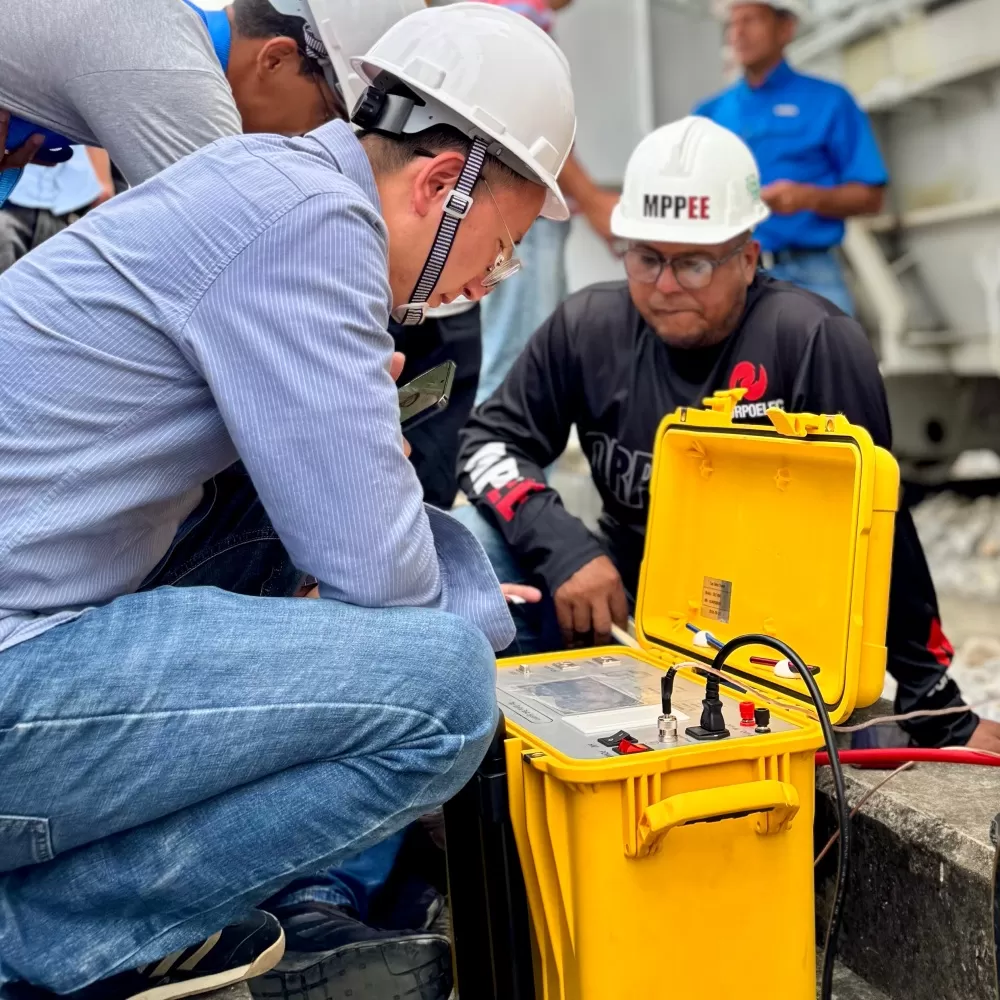
Before testing, the equipment should be de-energized, isolated and grounded according to site procedures. Contact surfaces should be inspected, and the Kelvin clamps should be placed consistently for every measurement. For breaker contact resistance, test current should be selected according to the equipment procedure or maintenance standard. If readings are compared over time, the same current level, connection points and temperature conditions should be used as much as possible.
A good practice is to take repeated readings and compare phases, poles or similar joints. A single value may not tell the whole story, but a rising trend or one phase reading much higher than the others can indicate contamination, loose bolting, oxide film, contact wear or mechanical pressure problems.
Conclusion
A micro-ohmmeter is essential for measuring low resistance in high-current electrical paths. By using a stable current source and four-wire Kelvin measurement, it can detect small resistance changes that ordinary multimeters cannot measure reliably. For power utilities, substations, switchgear manufacturers and industrial maintenance teams, micro-ohm testing helps identify poor contacts, loose joints and abnormal resistance before they become overheating or reliability problems. Elecgene offers hand-held 100A and 200A micro-ohmmeters, circuit breaker analyzers and complete electrical testing tools to support field testing, commissioning and preventive maintenance.
FAQ
1. What is a micro-ohmmeter used for?
A micro-ohmmeter is used to measure very low resistance in circuit breaker contacts, busbars, switchgear joints, disconnectors, grounding connections, welds, fuses and high-current conductors.
2. Why use four-wire Kelvin measurement?
Four-wire Kelvin measurement separates current injection from voltage sensing, reducing errors caused by test leads and contact resistance.
3. Is a micro-ohmmeter the same as a multimeter?
No. A standard multimeter is not designed for accurate micro-ohm measurements. A micro-ohmmeter uses higher test current and Kelvin measurement for low-resistance accuracy.
4. What test current should I choose?
The right current depends on the equipment and test procedure. Field contact-resistance testing commonly uses high current such as 30A, 50A, 100A or 200A depending on the application.
5. What causes high contact resistance?
High contact resistance can be caused by loose connections, oxidation, contamination, worn contacts, poor contact pressure, overheating damage or incorrect assembly.
6. Why choose Elecgene micro-ohmmeters?
Elecgene provides portable HLR-100 and HLR-200 micro-ohmmeters, power protection testing tools and circuit breaker analyzers for substations, switchgear maintenance and industrial electrical testing.

 English
  日本語
日本語  한국어
한국어  français
  Deutsch
  русский
  português
  العربية