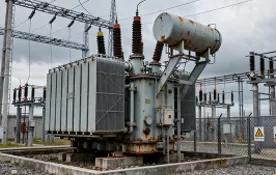
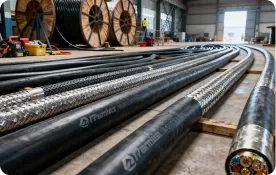
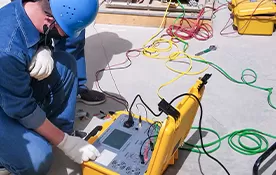
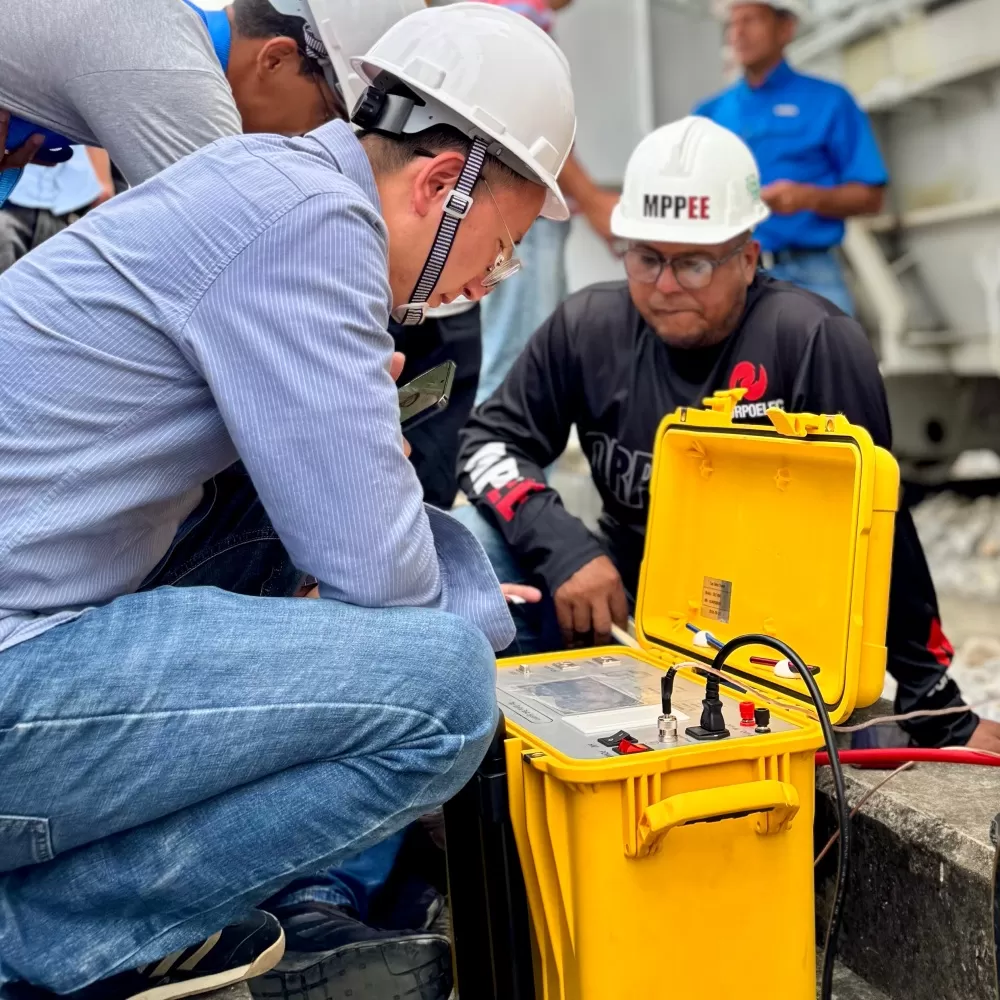
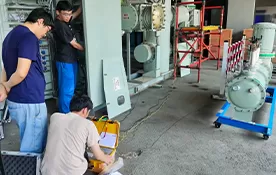
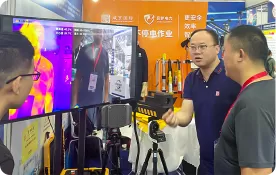
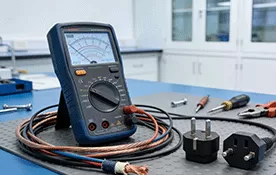
A secondary injection test kit is a relay testing instrument that injects controlled current and voltage signals directly into protection relay input terminals to verify relay settings, logic, timing and trip behavior. It is widely used in substations, switchboards, power plants, renewable energy stations, rail traction systems and industrial electrical maintenance. Unlike primary injection testing, secondary injection does not require high current through the whole primary circuit. It focuses on the protection relay, secondary wiring, trip logic and measurement functions, making it faster and more practical for commissioning and maintenance. Elecgene provides electrical testing instruments for substations, switchboards, power companies and industrial facilities.
What Is a Secondary Injection Test Kit?
A secondary injection test kit is a portable or bench-type device that simulates CT and PT secondary signals for testing protective relays without energizing the primary power system. In most relay testing work, it outputs programmable AC/DC current, voltage, frequency, phase angle and timing signals. The purpose is to confirm whether a relay responds correctly to simulated faults such as overcurrent, undervoltage, differential protection, distance protection, frequency variation, directional protection and breaker failure logic. The IEC 60255-1 measuring relays and protection equipment standard specifies common rules and requirements for measuring relays and protection equipment used in power system protection.
Elecgene’s relay testing solutions are designed for value calibration, action-time characteristic testing and complete group testing of protection devices, helping engineers reduce wiring changes and generate detailed test reports.
How Does a Secondary Injection Test Kit Work?
A secondary injection test kit works by generating accurate electrical signals and applying them to the relay’s current and voltage input circuits while monitoring the relay output contacts or trip signals. The tester compares the relay response with the expected setting, timing and protection logic.
During a typical test, the engineer isolates the relay circuit, connects current and voltage outputs from the test kit, connects binary inputs to relay trip contacts, selects a test template or manual ramp mode, then injects simulated fault conditions. The test kit records pickup values, dropout values, trip time, reset behavior and output contact status.
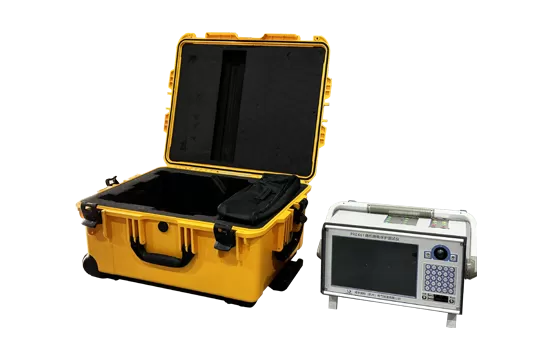
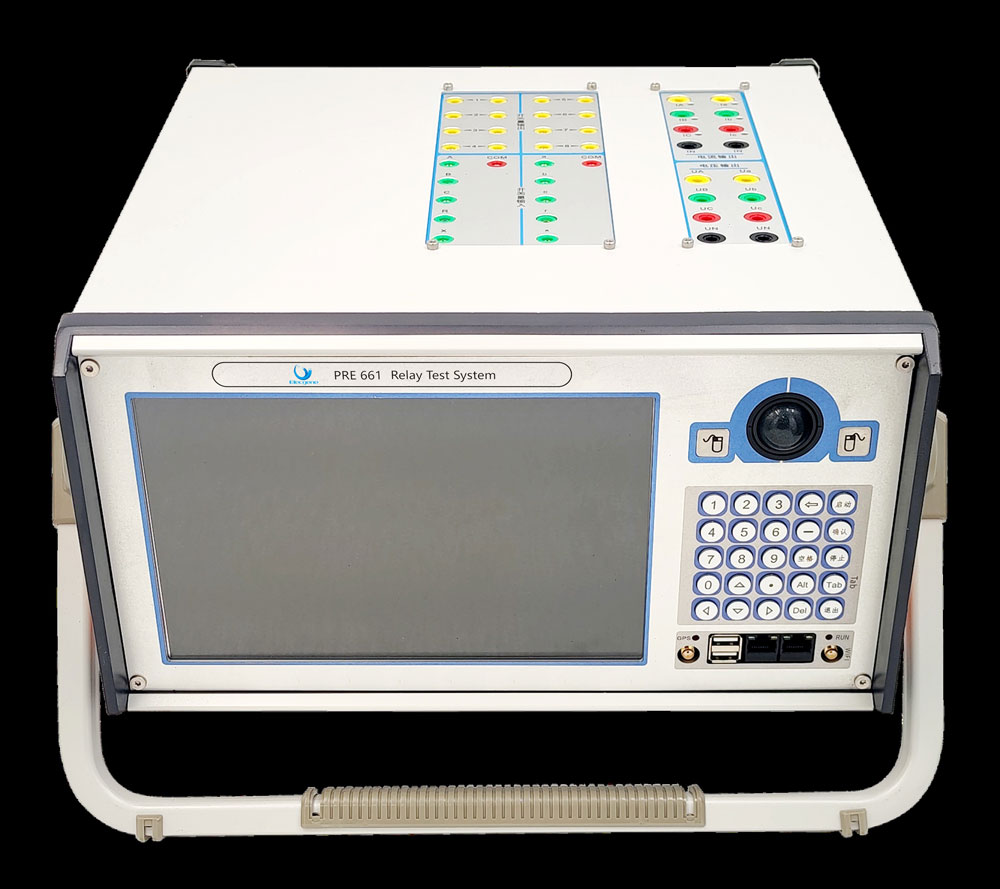
Elecgene’s PRE 661 6 Current and 6 Voltage Relay Test System uses 6 current and 6 voltage outputs. Its listed current output includes 6 × 0–30A AC, single-phase 0–180A AC, frequency range 0–1200Hz, phase angle range -360° to 360°, 10 isolated binary inputs and timing measurement from 0.1ms to 9999s.
Applications and Test Scope
Secondary injection testing is used to verify relay performance, protection settings, logic schemes and trip circuits before equipment is placed into service or returned after maintenance. It is especially useful because relay behavior can be tested without applying fault current to transformers, feeders, motors or breakers.
Common applications include distribution substations, transmission substations, traction substations, generator protection, transformer protection, feeder protection, motor protection, busbar schemes and renewable energy interconnection panels. The IEEE relay testing topic describes secondary injection as applying test currents and voltages directly to relay measurement input terminals while bypassing instrument transformers and the primary power system.
For field work, a secondary injection kit can test pickup accuracy, timing curves, harmonic restraint, directional elements, differential characteristics, frequency functions, voltage elements, logic inputs, trip outputs and communication-assisted schemes. Elecgene’s traction substation solution shows relay protection testing being used for distance protection, differential protection, overcurrent calibration and time-characteristic testing.
Secondary Injection vs Primary Injection: Comparison Table
Secondary injection and primary injection testing serve different purposes, and both may be needed in a complete protection-system maintenance program.
| Comparison Item | Secondary Injection Test Kit | Primary Injection Test System |
|---|
| Test Point | Relay secondary input terminals | Primary circuit, CTs, breakers and busbars |
| Main Purpose | Verify relay settings, timing and logic | Verify the full current path and CT/breaker operation |
| Output Level | Low secondary current and voltage signals | High current output, often hundreds or thousands of amps |
| Setup Time | Usually faster | Usually slower and heavier setup |
| Equipment Size | Portable relay test set | Larger current injection system |
| Best For | Commissioning, relay maintenance, setting verification | CT ratio, breaker trip path and full-loop checks |
| Limitation | Does not prove the whole primary current path | Less convenient for detailed relay logic simulation |
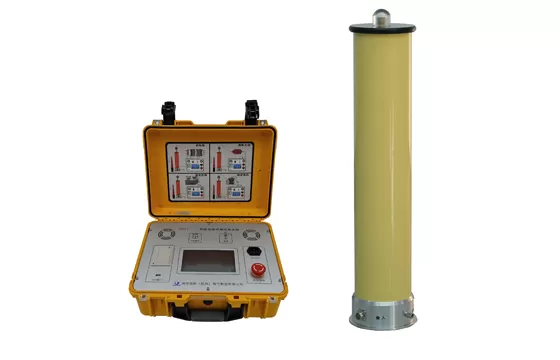
Elecgene’s HCG-1000 Pro Primary Current Injection Test System is designed for primary injection testing of protective relay equipment and circuit breakers, with up to 1000A AC maximum output. This makes it complementary to secondary injection rather than a replacement.
How to Select the Right Secondary Injection Test Kit
Selecting a secondary injection test kit means matching current channels, voltage channels, output accuracy, timing precision, binary I/O, software, portability and test templates to the relays being tested. A simple single-phase relay tester may be enough for basic overcurrent relays, while modern numerical relays often require multi-phase outputs and automated test plans.
| Selection Factor | What Buyers Should Check |
|---|
| Current Outputs | Number of phases, maximum current, continuous output time |
| Voltage Outputs | Phase count, AC/DC range, phase-angle control |
| Accuracy | Current, voltage, frequency, phase and timing precision |
| Binary Inputs/Outputs | Trip contact capture and command simulation |
| Test Modes | Manual ramp, state sequence, harmonic, distance and differential tests |
| Software | Templates, reports, settings import and data export |
| Portability | Weight, screen, battery, field case and power supply |
| Safety | Isolation, grounding, overload protection and clear wiring workflow |
For modern relay testing, buyers should also consider future requirements. The IEEE P3416 guide for relay test sets and tools focuses on relay test sets for type testing, functional acceptance testing, commissioning and maintenance testing.
Elecgene can support users with multi-phase relay test systems, primary current injection equipment and CT/PT analysis tools. For transformer and instrument-transformer verification, the TCT-200F CT & PT Analyzer supports CT/PT saturation, ratio, polarity and winding-resistance testing, helping engineers complete a broader protection-system diagnosis.
Conclusion
A secondary injection test kit is essential for verifying protective relay settings, timing, logic and trip behavior without energizing the primary power circuit. It is faster, safer and more flexible than primary injection for relay-focused testing, but it should be combined with primary injection or CT/PT testing when the full protection loop must be verified. For buyers, the right test kit depends on relay type, channel count, output range, accuracy, timing resolution, binary I/O, software reporting and field portability. Elecgene provides relay test systems, power protection testing tools, primary current injection systems and CT/PT analyzers to support commissioning, maintenance and troubleshooting in substations and industrial power systems.
FAQ
1. What is a secondary injection test kit?
A secondary injection test kit is a relay testing device that injects simulated current and voltage signals into relay input terminals to verify relay operation, timing and protection logic.
2. What is secondary injection testing used for?
It is used for protective relay commissioning, maintenance, setting verification, trip-time testing, logic testing and fault simulation in substations and industrial power systems.
3. What is the difference between primary and secondary injection testing?
Secondary injection tests the relay and secondary circuits directly, while primary injection tests the full primary current path, including CTs, breakers and associated wiring.
4. Can secondary injection test CT performance?
Not fully. Secondary injection can verify relay response to simulated CT signals, but CT ratio, polarity, saturation and burden should be checked with a CT/PT analyzer or primary injection method.
5. How many channels should a relay test kit have?
Single-phase testers are suitable for simple relays. Three-phase and six-phase systems are better for numerical relays, differential protection, distance protection and complex protection schemes.
6. Why choose Elecgene secondary injection test equipment?
Elecgene provides relay testing systems, power protection testing equipment, primary current injection systems and CT/PT analyzers for substations, switchboards, renewable power stations and industrial maintenance teams.

 English
  日本語
日本語  한국어
한국어  français
  Deutsch
  русский
  português
  العربية