Original | Electrical Test Lecture Hall | July 28, 2025 14:16 | Zhejiang
PART 1: Detection Purpose
According to the "Technical Specifications for Live Testing of Power Equipment" (Trial) and the "State Grid Corporation of China Substation Testing Management Regulations (Trial) State Grid (Operation and Inspection 3) 829-2017" and other relevant regulations, the power industry monitors, detects, and diagnoses the operating status of electrical equipment such as substations and lines without power interruption through inspections and patrols. This is to ensure the safe and stable operation of electrical equipment and to arrange maintenance work reasonably and in a timely manner. Because defects may be accompanied by different media such as heat, mechanical vibration, electromagnetic waves, and sound waves when they occur, various sensors are used during the detection process to conduct multi-dimensional and comprehensive testing to determine the defect issues and their locations.
PART 2: Acoustic Imaging Detection Principle
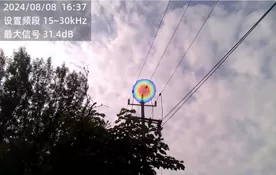
An acoustic imager utilizes an acoustic imaging technology based on an acoustic array. It works by measuring the sound pressure on a two-dimensional holographic plane, using various reconstruction algorithms to rebuild the sound field surrounding the surface of the sound source, and finally displaying the sound field in the form of graphics or animation.
In electrical equipment applications, the discharge part of the equipment will generate a charge neutralization process, accompanied by a steep current pulse. The action of the current pulse causes the local area where the partial discharge occurs to instantly heat up and expand, forming an "explosion"-like effect. This instantaneous change in medium density forms ultrasonic waves. The sound wave spectrum generated by partial discharge is very wide, ranging from tens of Hz to several MHz. Signals below 20kHz can be heard by the human ear, while ultrasonic signals above this frequency must be received by ultrasonic sensors. By measuring the sound pressure level, time delay, and other information of the ultrasonic signals, the algorithm overlays it onto the visible light image to achieve sound source localization.
PART 3: Equipment Used in This Test
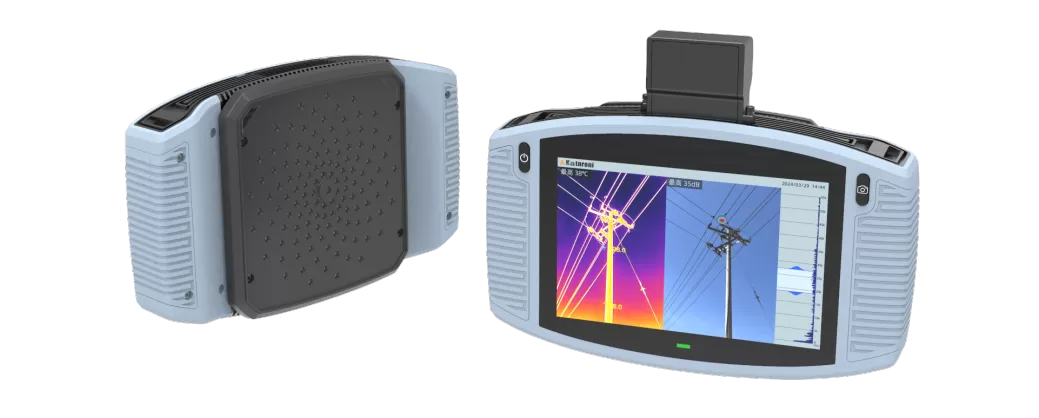
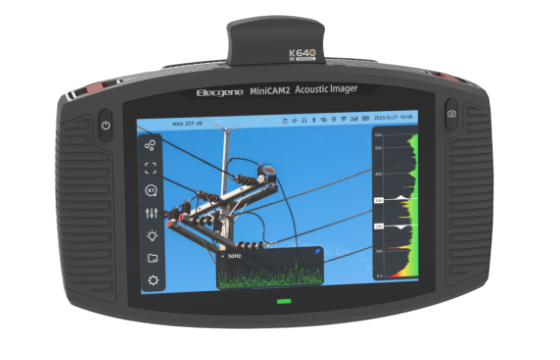
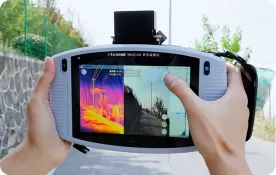
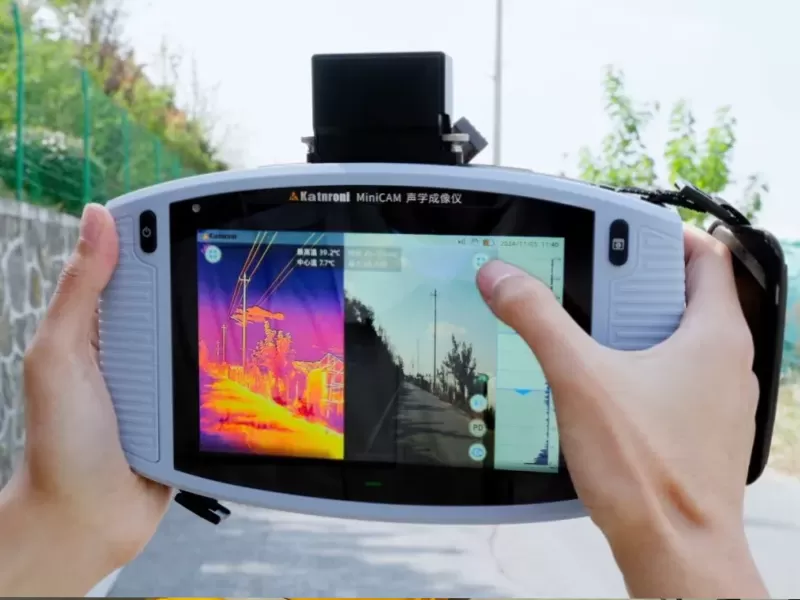
The MiniCAM acoustic infrared imager is a rapid detection device developed based on acoustic positioning and sound analysis technology to address the lack of inspection methods for electrical equipment discharge positioning, mechanical abnormal noise positioning, and natural gas leak positioning.
The device features 128 microphone sensors, a 7-inch full-color touch screen, and weighs only about 1.3kg.
It is simple to operate and detects quickly.
It can find abnormal noise points and discharge points of target equipment from a long distance, non-contact, and without power interruption, achieving the purposes of live detection, defect early warning, and targeted maintenance.
The equipment can be configured with an infrared imaging function to achieve acoustic + infrared composite state detection, sound-light complementarity, and multi-dimensional detection.
PART 4: Defect Detection Report
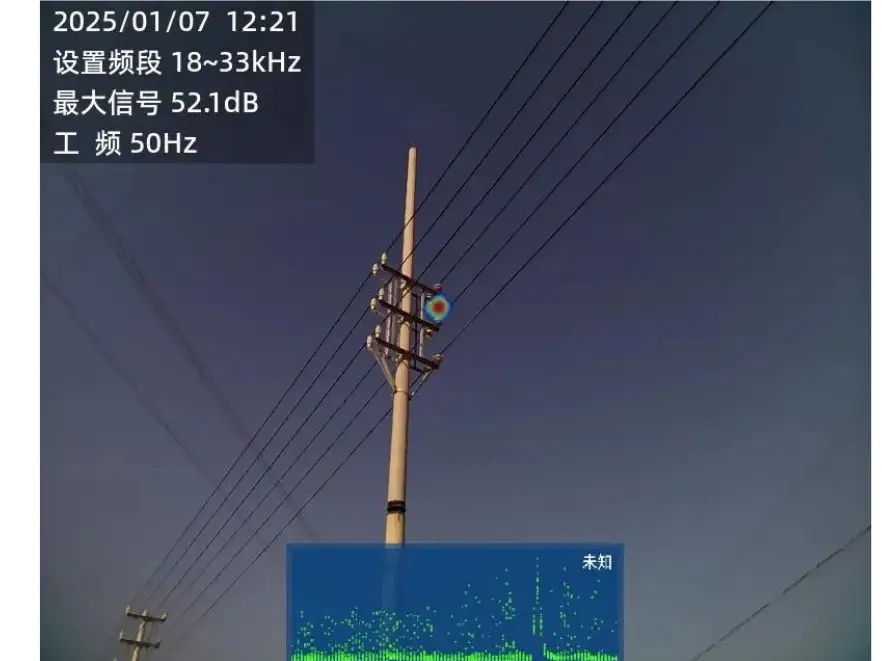
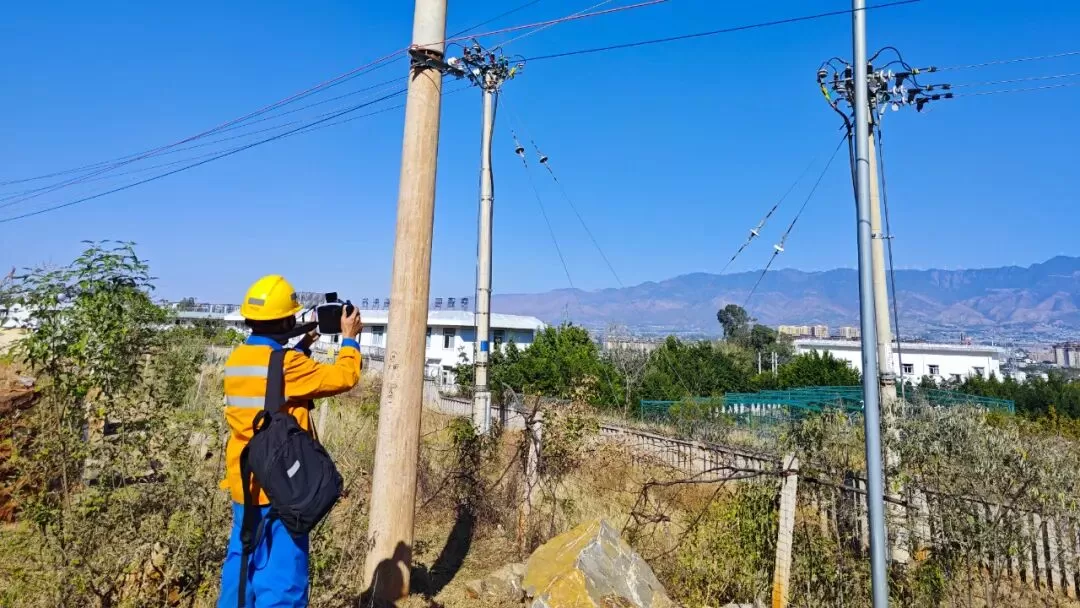
1. Moderate discharge at the wire clamp of pole tower #028 of the 10kV Line I Shaofang incoming line
Table 1: Basic Information & Detection Content
| Category | Details |
| Customer Unit | XX Power Supply Section, China Railway XX Bureau Group Co., Ltd. |
| Testing Unit | Xianheng International (Hangzhou) Electrical Manufacturing Co., Ltd. |
| Line Name | 10kV Line I Shaofang Incoming Line Pole #28 to #65 |
| Testing Instrument | Acoustic Infrared Imager |
| Test Date | 2025.01.07 |
| Tester | Gao Wenhao |
| Weather / Temp / Humidity | Sunny / Unknown / Unknown |
| Distance / Terrain | Approx. 10m / Mountainous |
| Discharge Part | Wire clamp |
| Testing Part | 10kV Line |
| Defect Nature | Moderate discharge |
Detection Result Analysis
Conclusion Analysis: For pole tower #028 of the 10kV Line I Shaofang incoming line, an acoustic infrared imager was used at a distance of about 10m, detecting a 38.5dB discharge. There was basically no interference on site, the discharge sound was inaudible to the human ear, and there was no heating phenomenon. Through repeated testing and observation, it is preliminarily judged that the wire clamp is loose or damaged, causing the discharge. The specific cause needs to be confirmed by climbing the pole or live-line work inspection.
Handling Recommendations: The on-site discharge point is generated at the wire clamp position, showing moderate discharge. It is recommended to conduct regular patrols to observe whether the discharge phenomenon intensifies. If conditions permit, it is recommended to complete the maintenance during a power outage, through live-line work, or within other planned outages in the near future.
PART 5: On-site Materials
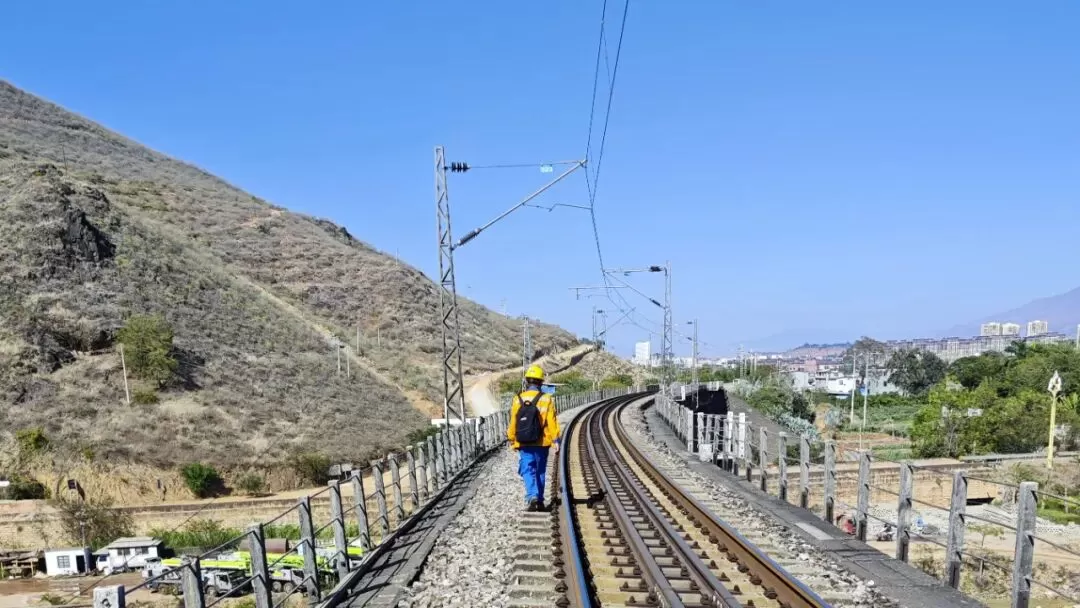
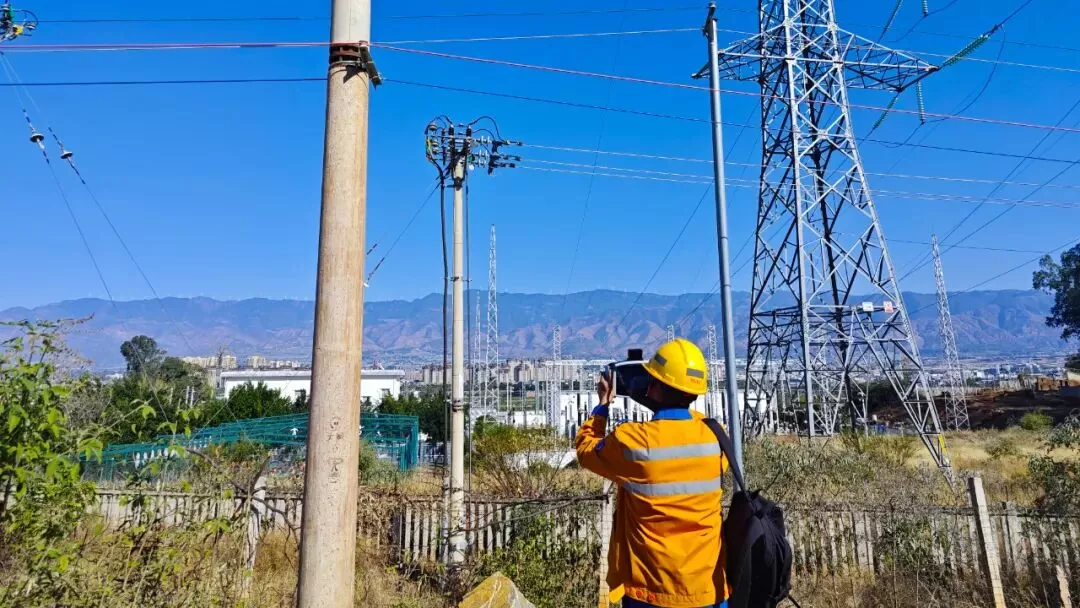
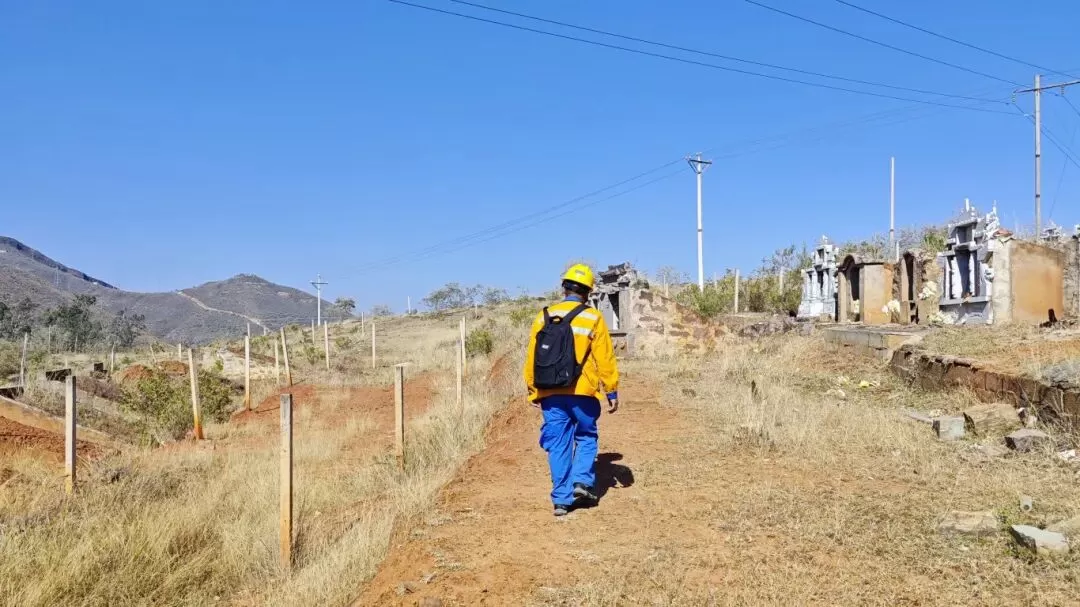
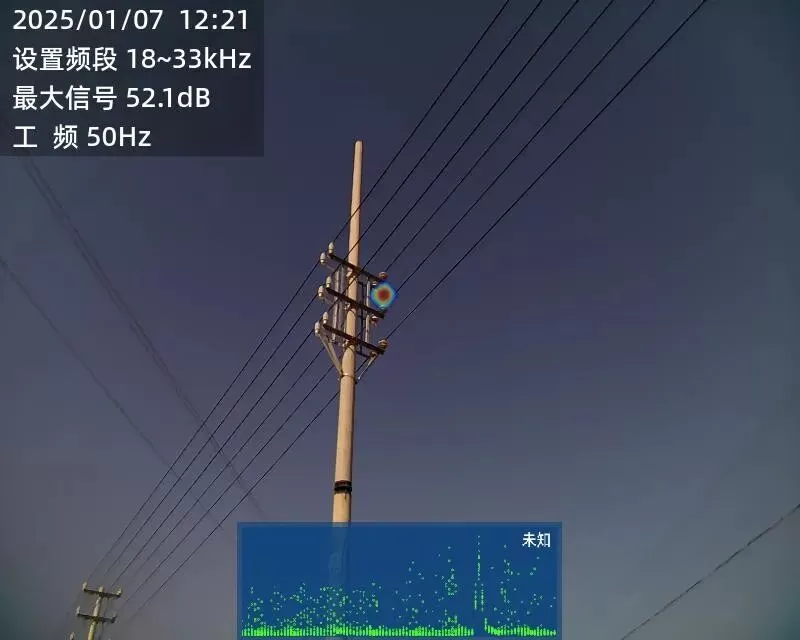

 English
  日本語
日本語  한국어
한국어  français
  Deutsch
  русский
  português
  العربية